
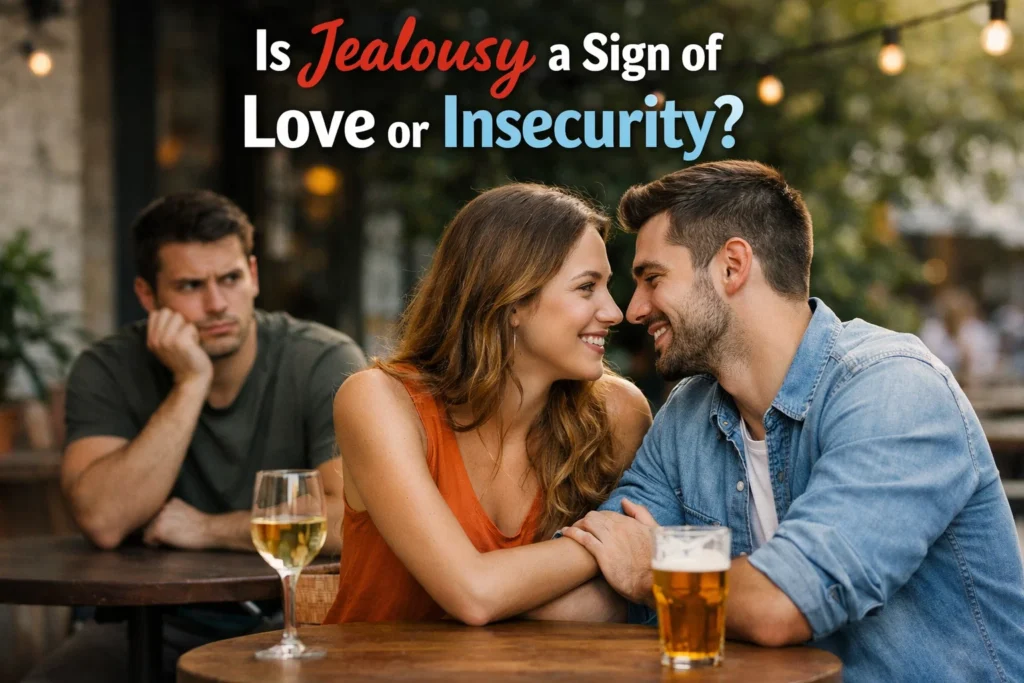
Is Jealousy a Sign of Love or Insecurity?
Is jealousy a sign of love or insecurity? This question echoes through countless relationships as partners struggle to interpret that uncomfortable twisting feeling in their stomachs when someone else captures their loved one’s attention. Popular culture often romanticizes jealousy as proof of passion, suggesting that if your partner doesn’t feel jealous, they must not truly care. However, psychological science tells a different, more nuanced story about this complex emotion and what it reveals about relationships and ourselves.
Therefore, understanding the true nature of jealousy—whether it stems from love or insecurity—becomes essential for building healthy relationships based on trust rather than fear. While a fleeting pang of jealousy might be natural, chronic jealous behaviors that involve controlling, monitoring, or restricting a partner signal deeper issues that can ultimately destroy the very relationship they aim to protect. In this article, we will explore the psychological foundations of jealousy, distinguish between healthy protective instincts and toxic possessiveness, examine the roots of jealous feelings, and provide evidence-based strategies for managing jealousy in ways that strengthen rather than undermine intimate connections.
Understanding Jealousy: The Basics
Before determining whether jealousy signals love or insecurity, we must understand what this emotion actually is and how it functions psychologically.
Defining Jealousy in Romantic Relationships
Jealousy is a complex emotional response that arises when we perceive a threat to something we value—in romantic contexts, the relationship itself. It involves fear of loss, anxiety about being replaced, vigilance toward potential rivals, and desire to protect what we have. Unlike envy, which involves wanting something someone else possesses, jealousy fundamentally concerns guarding and protecting existing relationships.
From an evolutionary perspective, jealousy likely developed as a protective mechanism serving important survival functions. In ancestral environments, maintaining pair bonds had direct implications for survival and reproductive success. The emotional system that motivated guarding those bonds—jealousy—conferred evolutionary advantages. However, what once served survival in radically different social contexts now often manifests in ways poorly suited to modern relationships.
The Spectrum of Jealous Responses
Jealousy exists on a spectrum from fleeting, manageable reactions to consuming, destructive obsessions. At one end, mild jealousy represents a momentary emotional response to specific situations—a brief pang when your partner mentions an attractive colleague, quickly dismissed and forgotten. This represents the normal human response of caring about relationships and wanting them to continue.
At the other end, pathological jealousy involves constant suspicion, monitoring behaviors, accusations without evidence, and extreme distress that dominates thoughts and behaviors. Between these extremes lie various gradations of jealous response, distinguished by intensity, duration, behavioral manifestations, and impact on relationship functioning.
Cultural Context and Jealousy
Cultural norms profoundly shape how jealousy is expressed and interpreted. Some cultures view jealousy as natural proof of love and commitment, while others see it as immature possessiveness to be overcome. Romantic traditions that idealize exclusive passion—”you should be my everything”—create fertile ground for jealous feelings by establishing unrealistic expectations that partners should meet all emotional needs.
Understanding that cultural narratives shape jealousy helps contextualize these feelings. The belief that “if you loved me, you wouldn’t need anyone else” reflects cultural romanticism rather than psychological truth. Humans are fundamentally social creatures who naturally form multiple meaningful connections. Recognizing this helps distinguish between cultural scripts about jealousy and actual relationship health.
Jealousy as Expression of Love: Myth or Reality?
Many people believe jealousy proves love—that its absence indicates indifference. Examining this assumption reveals important truths about what jealousy actually signals.
The Kernel of Truth: Caring and Investment
There exists a kernel of truth in connecting jealousy to love. When we genuinely care about relationships, the possibility of loss creates anxiety. This basic protective instinct—wanting to maintain something valuable—can manifest as mild jealous responses. In this limited sense, some jealousy reflects emotional investment and desire for relationship continuity.
However, this connection between jealousy and caring is easily overstated and misunderstood. The presence of jealousy doesn’t prove love, and its absence doesn’t indicate lack of caring. Secure, confident love can exist without significant jealousy. Partners deeply committed to each other may experience minimal jealousy because their security in the relationship reduces perceived threats.
When “Love-Based” Jealousy Becomes Problematic
Even when jealousy originates from genuine caring, it easily crosses into problematic territory. Love-based jealousy that leads to controlling behaviors, constant suspicion, emotional manipulation, or restrictions on partner’s autonomy has transformed from protective instinct into relationship poison.
Consider the difference between these internal experiences. Love-based protective feeling: “I cherish you and want to continue building our relationship.” Insecurity-based jealous anxiety: “I’m terrified of losing you and need to control circumstances to prevent that.” The first focuses on positive connection; the second on fear and control. While both might arise from caring, their psychological foundations and behavioral manifestations differ dramatically.
The Cultural Romanticization of Jealousy
Popular media frequently portrays jealousy as romantic—the jealous partner as passionate and committed, jealous behaviors as flattering proof of devotion. Movies and songs celebrate possessiveness, surveillance, and even stalking behaviors when wrapped in romantic packaging.
This cultural narrative is profoundly damaging. It normalizes unhealthy relationship dynamics, teaches young people that control equals love, prevents recognition of early warning signs of abuse, and creates confusion about healthy versus toxic relationship patterns. Believing jealousy proves love makes people more vulnerable to accepting or perpetrating controlling behaviors that ultimately harm relationships.
Jealousy as Sign of Insecurity: The Psychological Reality
While jealousy may involve caring, psychological research clearly establishes that problematic jealousy fundamentally stems from insecurity rather than love.
The Core of Insecurity
At its psychological foundation, persistent jealousy reflects insecurity—feelings of inadequacy, fear of not being enough, anxiety about worthiness of love, and hypervigilance toward potential threats. These insecurities create a lens through which ambiguous situations are interpreted as threatening and minor interactions become evidence of impending loss.
People struggling with deep insecurity essentially ask themselves, “Why would anyone choose me when they could have someone better?” This fundamental self-doubt makes the relationship feel perpetually precarious, constantly vulnerable to dissolution. Every attractive stranger, friendly coworker, or ex-partner mentioned becomes a potential replacement—someone inevitably superior who will steal away the loved one.
How Insecurity Fuels Jealous Behaviors
Insecurity drives specific jealous behaviors as attempts to manage overwhelming anxiety. Monitoring and surveillance (checking phones, social media, whereabouts) creates illusion of control over threatening uncertainty. Accusations and interrogations seek reassurance but paradoxically increase anxiety by focusing attention on feared outcomes. Restrictions and rules attempt to eliminate perceived threats by controlling partner’s interactions and activities. Emotional manipulation uses guilt, anger, or withdrawal to discourage behaviors that trigger insecurity.
None of these behaviors strengthen relationships or address underlying insecurity. Instead, they create self-fulfilling prophecies where controlling behaviors drive partners away, confirming the original fear of abandonment. The insecurity remains unaddressed while relationship damage accumulates.
Sources of Romantic Insecurity
Understanding where insecurity originates helps distinguish it from love. Common sources include attachment wounds from early caregiving experiences that taught love is unreliable, past relationship betrayals that created hypervigilance toward signs of infidelity, low self-esteem making it difficult to believe anyone would genuinely choose you, comparison with others leading to constant anxiety about being inadequate, and anxious attachment style characterized by fear of abandonment and need for constant reassurance.
These sources exist independent of current partner’s actual behavior. Someone with profound insecurity will feel jealous even with completely trustworthy partners because the anxiety stems from internal beliefs rather than external realities.
Distinguishing Healthy Concern from Toxic Jealousy
Not all jealous-like feelings are problematic. Understanding the difference between healthy protective instincts and toxic jealousy is crucial.
Characteristics of Healthy Protective Feelings
Healthy concern for relationship wellbeing differs fundamentally from toxic jealousy. Healthy responses are proportionate to actual situations—significant concern about genuine threats versus intense reactions to minor or imaginary scenarios. They’re temporary, passing relatively quickly without rumination. They trust partner’s intentions despite discomfort. They’re openly communicated without accusations or demands. They don’t restrict partner’s autonomy or require constant reassurance.
For example, feeling uncomfortable when a partner’s ex contacts them wanting to “reconnect” represents reasonable protective instinct. Discussing this discomfort openly, trusting your partner to handle it appropriately, and moving forward once they’ve responded represents healthy processing. Demanding they immediately block the ex, checking their phone constantly, or punishing them emotionally for the contact represents toxic jealousy.
Red Flags of Toxic Jealousy
Certain patterns unmistakably signal that jealousy has crossed into toxic territory. These include constant suspicion without evidence of wrongdoing, inability to trust despite partner’s consistent reliability, controlling behaviors restricting partner’s activities or relationships, emotional volatility with frequent accusations or withdrawal, obsessive rumination about potential threats, requiring constant reassurance that’s never satisfying, and retaliatory behaviors designed to make partner jealous or punish them.
Toxic jealousy fundamentally disrespects partner’s autonomy and dignity. It operates from assumption of guilt, requiring partners to constantly prove innocence. This creates relationship dynamics more resembling interrogation than partnership.
The Trust Test
One simple test distinguishes healthy concern from toxic jealousy: Does it respect trust? Healthy concern says, “I feel uncomfortable about this situation, and I trust you to handle it appropriately while respecting our relationship.” Toxic jealousy says, “I can’t trust you in this situation, so I need to control it or you.”
Trust represents the foundation of healthy relationships. Jealousy that systematically violates trust through suspicion, surveillance, and control indicates insecurity rather than love. Partners who genuinely love and respect each other extend trust until given concrete reason not to—and even then, address breaches directly rather than through controlling behaviors.
The Psychological Roots of Jealousy
Understanding why jealousy arises helps address it effectively. Multiple psychological factors contribute to jealous responses.
Attachment Styles and Jealousy
Attachment theory provides powerful lens for understanding jealousy. Individuals with anxious attachment patterns—characterized by fear of abandonment and need for constant reassurance—experience more intense and frequent jealousy. Their internal working model of relationships assumes love is conditional and precarious. Every interaction becomes opportunity for feared abandonment to materialize.
Anxiously attached individuals often engage in “protest behaviors” when jealous—picking fights, withdrawing emotionally, making passive-aggressive comments, monitoring partners—attempting to restore closeness and security. Unfortunately, these behaviors typically achieve the opposite, pushing partners away and increasing relational anxiety.
In contrast, individuals with secure attachment experience jealousy less frequently and less intensely. They trust that worthy partners won’t betray them, and if partners prove untrustworthy, they have confidence in their own ability to survive and thrive regardless. This security doesn’t eliminate jealousy entirely but dramatically reduces its power and frequency.
Past Trauma and Betrayal
Previous experiences of betrayal, infidelity, or abandonment create hypervigilance in future relationships. Someone who discovered a previous partner’s affair may interpret innocent behaviors as warning signs, constantly scanning for evidence of repeat betrayal. The nervous system, trained by past trauma to detect threats, fires alarm bells even when current partner behaves trustworthily.
This represents post-traumatic response rather than current relationship reality. The jealousy stems from past wounds rather than present circumstances. Without addressing underlying trauma, individuals may perpetually sabotage new relationships by projecting past betrayals onto innocent partners.
Self-Esteem and Comparative Thinking
Low self-esteem directly fuels jealousy by creating belief that you’re inherently less desirable than potential rivals. When you don’t value yourself, it becomes impossible to understand why anyone else would. Every attractive person your partner encounters becomes existential threat because you assume they’re obviously superior.
This comparative thinking—constantly measuring yourself against others and finding yourself lacking—creates perpetual anxiety. Social media dramatically exacerbates this by providing endless opportunities for unfavorable comparison with carefully curated highlight reels of others’ lives and appearances.
Fear of Vulnerability and Loss
Ultimately, jealousy often represents fear of vulnerability inherent in loving someone. The more we invest emotionally, the more we fear losing that investment. Loving someone requires accepting that we cannot control whether they continue choosing us. This fundamental uncertainty proves intolerable for some, leading to jealous attempts to control uncontrollable outcomes.
Philosopher and psychologist Erich Fromm distinguished between mature and immature love. Immature love says, “I love you because I need you.” Mature love says, “I need you because I love you.” Jealousy rooted in insecurity reflects immature love—desperate need for the other person to validate our worth and provide security we cannot provide ourselves.
The Impact of Jealousy on Relationships
Understanding whether jealousy signals love or insecurity becomes crucial when we examine how it affects relationship health and longevity.
How Toxic Jealousy Damages Relationships
Persistent jealous behaviors erode relationship foundations in predictable ways. Trust deteriorates as constant suspicion and accusations communicate that partner isn’t believed or respected. Communication breaks down as conversations become minefields where innocent statements trigger jealous reactions. Intimacy diminishes because emotional closeness requires vulnerability that jealous dynamics make unsafe. Resentment builds as controlled partners feel suffocated while jealous partners feel chronically anxious despite control attempts. Independence suffers as partners gradually restrict their lives to avoid triggering jealous reactions.
Over time, these dynamics create relationships characterized by walking on eggshells, emotional exhaustion, loss of individual identity, and eventual breakdown through either explosive termination or slow suffocation. Ironically, jealousy motivated by fear of loss often creates the very abandonment it fears.
The Self-Fulfilling Prophecy
Jealous behaviors frequently create self-fulfilling prophecies. Partners subjected to constant suspicion, monitoring, and restriction eventually feel suffocated and leave—confirming the jealous person’s original fear that they would be abandoned. The jealous individual then interprets this as validation (“See, I was right not to trust them!”) rather than recognizing their behaviors drove the partner away.
This pattern perpetuates across relationships unless underlying insecurity is addressed. The jealous person enters each new relationship carrying beliefs confirmed by previous experiences, unaware that their behaviors created those very outcomes.
When Jealousy Escalates to Abuse
In extreme cases, jealousy escalates into emotional or physical abuse. Controlling behaviors intensify, isolation from friends and family increases, emotional abuse through constant criticism or belittling becomes normalized, and in severe cases, physical violence erupts. Many abusive relationships begin with jealousy that seemed flattering or romantic before gradually escalating into dangerous control.
This progression underscores why distinguishing healthy concern from toxic jealousy matters profoundly. What begins as “you just love me so much you can’t stand the thought of losing me” can progress to “you’re not allowed to have friends, leave the house without permission, or make decisions independently.”
Managing Jealousy: A Healthier Approach
Whether jealousy stems more from love or insecurity, learning to manage it constructively protects relationship health.
Self-Awareness and Ownership
The first step involves honest self-reflection acknowledging jealous feelings without judgment, identifying triggers and patterns, examining underlying fears and insecurities, and distinguishing between actual threats and anxiety-driven interpretations. This requires courage to look inward rather than projecting blame outward onto partners.
Ask yourself: What am I actually afraid of? What does this jealousy reveal about my own insecurities? Are my reactions proportionate to actual situations? Has my partner given me concrete reasons not to trust them? Often, honest answers reveal jealousy stems from personal wounds rather than partner’s behavior.
Communicating Vulnerability Instead of Accusations
When jealousy arises, how it’s communicated determines whether it strengthens or damages relationships. Accusatory communication: “Who were you talking to? Why didn’t you answer my text immediately? I know you’re interested in them.” This puts partner on defensive, creates conflict, and solves nothing.
Vulnerable communication: “I noticed you talking with your coworker and felt a pang of jealousy. I know it’s probably my own insecurity, but I wanted to share what I’m experiencing rather than letting it fester.” This invites connection, demonstrates self-awareness, and allows partner to provide reassurance.
Vulnerability requires more courage than accusations but builds intimacy instead of eroding it. Partners can’t respond supportively to attacks but typically respond with compassion to openly shared struggles.
Building Self-Worth Independent of Relationships
Since much jealousy stems from low self-esteem, developing independent sense of worth dramatically reduces jealous tendencies. This involves cultivating interests and accomplishments outside relationships, maintaining friendships and connections beyond romantic partnership, practicing self-compassion and positive self-talk, challenging negative self-comparisons, and developing confidence in your inherent value regardless of relationship status.
When your sense of worth depends entirely on your partner’s attention and validation, any perceived threat to that source of worth triggers alarm. When your worth rests more firmly within yourself, relationship threats feel less existential.
Developing Secure Attachment
For those with anxious attachment patterns fueling jealousy, developing earned secure attachment through therapy or conscious relationship work transforms jealous tendencies. This involves challenging internal working models about love being conditional, learning to self-soothe rather than requiring constant partner reassurance, gradually building trust in yourself and worthy partners, and processing past attachment wounds that created insecurity.
Therapy, particularly attachment-focused approaches, can facilitate this developmental work. While attachment patterns established in childhood influence us profoundly, they’re not immutable. Earned security through conscious work allows experiences of healthy relationships to gradually rewire attachment expectations.
Mindfulness and Emotional Regulation
Mindfulness practices help manage jealousy by creating space between feeling and reaction. When jealousy arises, mindfulness allows noticing the emotion without immediately acting on it, observing thoughts without believing them as facts, tolerating discomfort without desperate attempts to eliminate it, and choosing conscious responses rather than impulsive reactions.
For example, notice: “I’m having the thought that my partner is interested in someone else. This is anxiety speaking, not reality. I can feel this discomfort without acting on it.” This creates crucial pause allowing reason to engage before jealousy drives destructive behaviors.
When to Seek Professional Help
Some jealousy requires professional intervention. Seek therapy if jealousy frequently causes relationship conflict, you recognize jealous behaviors as problematic but can’t stop them, jealousy stems from unresolved trauma, jealousy significantly impairs your quality of life, or patterns persist despite sincere efforts to change.
Therapists can help identify and address underlying causes, develop specific skills for managing jealous responses, process past traumas fueling current insecurity, and improve relationship dynamics when both partners participate.
Final Considerations
So, is jealousy a sign of love or insecurity? The answer is nuanced but crucial: while fleeting jealousy may reflect the natural vulnerability of caring deeply about someone, persistent problematic jealousy fundamentally stems from insecurity rather than love. The romantic notion that jealousy proves love is not only psychologically inaccurate but dangerous, normalizing controlling behaviors that damage or destroy relationships.
True love—mature, secure love—trusts. It respects partner autonomy. It feels uncomfortable with perceived threats but doesn’t respond with control, surveillance, or accusations. It recognizes that attempting to possess or control another person fundamentally contradicts loving them. Love wants the beloved to flourish; insecurity wants to restrict them to manage our own anxiety.
This doesn’t mean jealousy makes you a bad person or incapable of love. Jealousy is a profoundly human emotion everyone experiences occasionally. The question isn’t whether you feel jealous but what you do with those feelings. Do you use them as opportunities for self-reflection and growth? Do you communicate vulnerably rather than accusatorily? Do you address underlying insecurities driving the jealousy?
Understanding jealousy’s roots in insecurity rather than love opens pathways to healthier relationships. Instead of indulging jealousy as proof of passion, we can recognize it as signal that internal work is needed—building self-worth, processing past wounds, developing secure attachment, and learning to trust both ourselves and worthy partners.
For those struggling with jealousy, know that change is possible. With honest self-examination, willingness to be vulnerable, commitment to addressing underlying insecurity, and sometimes professional support, you can develop the security that allows love to flourish without the poison of toxic jealousy.
For those with jealous partners, remember that you cannot fix their insecurity through constant reassurance or restricting your life. Their jealousy is not your responsibility to manage through self-limitation. Healthy relationships require mutual trust and respect for autonomy. If a partner’s jealousy crosses into controlling or abusive territory, recognize those red flags and prioritize your safety and wellbeing.
Finally, for everyone, remember that the most beautiful relationships rest on foundations of trust, respect, and security—not jealousy, control, and fear. When we’re confident in ourselves and trust in our partners, we create space for love to bloom without the weeds of insecurity choking it. That’s the relationship worth cultivating.
Read Also
- How to Deal with Jealousy Without Being Controlling
- Understanding Attachment Styles in Relationships
- Building Self-Esteem: A Psychological Guide
- Recognizing Signs of Toxic Relationships
- How to Communicate Effectively in Relationships
