
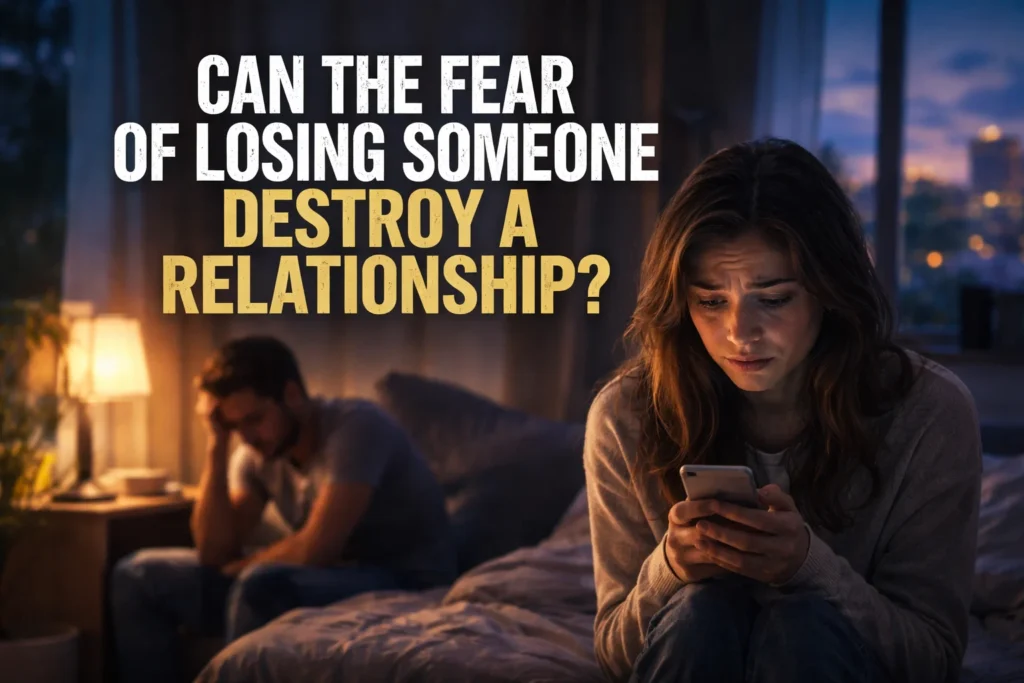
Can the Fear of Losing Someone Destroy a Relationship?
Loving someone often brings feelings of closeness, safety, and emotional connection.
However, for many people, love is accompanied by a quiet but powerful fear: the fear of losing the person they love.
When this fear is unrecognized or unmanaged, it can slowly take control of thoughts, behaviors, and decisions within the relationship. And this leads to an important question:
Can the fear of losing someone actually destroy the relationship you’re trying so hard to protect?
From a psychological perspective, the answer is yes, it can — especially when fear replaces trust, autonomy, and emotional balance.
In this article, we’ll explore where this fear comes from, how it shows up in relationships, the warning signs to pay attention to, and most importantly, how to prevent fear from sabotaging love.
1. Where Does the Fear of Losing Someone Come From?
The fear of losing a partner rarely appears out of nowhere. It usually has deep emotional roots.
Some of the most common origins include:
childhood experiences of abandonment or emotional neglect
unstable or inconsistent caregivers
traumatic breakups
betrayal or infidelity in past relationships
low self-esteem
fear of being “not enough”
emotional dependence learned early in life
When these experiences are not processed, the emotional system stays on high alert, constantly thinking:
“If I relax, I’ll lose them.”
2. Love or Fear Disguised as Love?
Not every intense emotional reaction comes from love.
Sometimes, what looks like love is actually fear.
Phrases such as:
“I can’t live without you.”
“You’re everything I have.”
“If you leave, my life is over.”
may sound romantic, but psychologically, they often reflect emotional dependency, not healthy attachment.
Love strengthens.
Fear restricts.
3. How the Fear of Losing Someone Shows Up in a Relationship
This fear usually doesn’t appear openly.
Instead, it shows up through behaviors that slowly wear the relationship down.
1. Excessive jealousy
Every situation feels like a threat:
friends
coworkers
social media interactions
delayed replies
The partner begins to feel constantly monitored.
2. Constant need for reassurance
Questions like:
“Do you still love me?”
“Are you going to leave me?”
“Are you sure you want to be with me?”
Over time, this need for reassurance becomes emotionally exhausting.
3. Control disguised as care
Statements such as:
“I’m just worried about you.”
“I do this because I love you.”
“It’s for your own good.”
What seems like concern often turns into control and boundary violations.
4. Losing oneself
To avoid being abandoned, the person may:
suppress opinions
avoid expressing discomfort
give up friendships
reshape their identity to please the partner
All in the hope of preventing loss.
5. Constant anxiety
Even when things are going well, there’s a persistent feeling that something bad is about to happen.
The relationship stops being a place of emotional safety.
4. A Practical Example
Imagine someone who feels anxious whenever their partner goes out with friends. They send multiple messages, feel irritated if responses take too long, and imagine worst-case scenarios.
They’re not reacting to the present moment.
They’re reacting to old emotional wounds activated by the possibility of loss.
Over time, the partner may begin to:
feel suffocated
avoid conflict
withhold information
emotionally withdraw
Ironically, the fear of losing creates the very distance it fears.
5. Why Can the Fear of Losing Someone Destroy a Relationship?
Because it changes the nature of the bond.
When fear takes control:
love turns into anxiety
care turns into surveillance
dialogue turns into interrogation
partnership turns into emotional dependence
No relationship thrives when one person must shrink so the other can feel safe.
6. Attachment Is Not the Same as Love
Psychology clearly distinguishes emotional attachment from healthy love.
Excessive attachment is driven by:
fear
insecurity
emotional fusion
dependence
Healthy love involves:
choice
autonomy
trust
mutual respect
When fear dominates, the relationship becomes a strategy to avoid pain rather than a conscious emotional choice.
7. What It’s Like to Be With Someone Who Fears Losing You
The partner on the other side also suffers.
They may experience:
guilt for wanting personal space
pressure to constantly reassure
difficulty being authentic
emotional fatigue
feeling responsible for the other person’s happiness
Over time, this often leads to emotional distance — even when love still exists.
8. How to Deal With the Fear of Losing Someone
1. Acknowledge the fear
Admit to yourself:
“This isn’t just love. There’s fear here too.”
Awareness is the first step toward change.
2. Understand its origin
Ask yourself:
Where does this fear really come from?
Is it about my current relationship or my past?
What am I truly afraid of losing?
3. Rebuild your sense of self
A healthy relationship cannot be your only emotional pillar.
Reconnect with:
friendships
personal goals
hobbies
self-care
4. Strengthen your self-esteem
The more you believe in your own worth, the less you need to cling to avoid abandonment.
5. Learn to tolerate uncertainty
No relationship offers absolute guarantees.
Accepting this reality reduces anxiety and creates emotional freedom.
6. Seek professional help
Therapy helps you:
identify attachment patterns
heal abandonment wounds
build emotional security
develop healthier relationships
9. Does the Fear Ever Completely Go Away?
Not entirely.
Some level of fear is human.
The difference lies in who leads the relationship:
fear or love.
When fear is acknowledged and cared for, it loses its power.
When ignored, it silently takes over.
10. Healthy Love Does Not Require Surveillance
Love is not:
control
constant monitoring
self-erasure
emotional tension
Love is:
trust
open communication
respect for boundaries
freedom
choosing each other — not holding on out of fear
Final Thoughts
Yes, the fear of losing someone can destroy a relationship when it becomes the driving force behind emotional decisions and behaviors.
Healthy relationships are not built on fear, but on emotional security, maturity, and respect for individuality.
The more you try to hold someone through fear, the more fragile the bond becomes.
The more you strengthen yourself internally, the more space love has to exist freely.
In the end, the most important question isn’t just:
“What if I lose them?”
But also:
“What am I losing of myself by living in constant fear?”
