
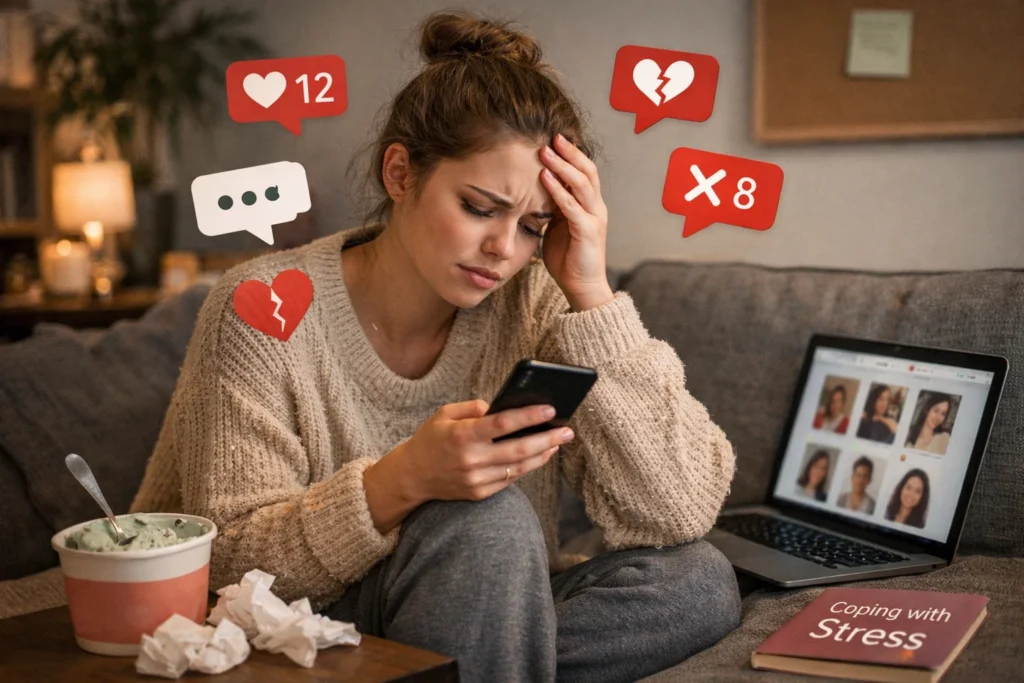
Dating Apps Can Be Stressful, Here’s How to Cope
Swipe left. Swipe right. Match. Message. Wait. Repeat. If this cycle sounds exhausting, you’re not alone. Dating apps have revolutionized how we meet romantic partners, but they’ve also introduced a unique set of psychological stressors that can leave users feeling drained, anxious, and questioning their self-worth.
The Psychology Behind Dating App Stress
Dating apps transform the deeply personal experience of romantic connection into something that resembles a game or shopping experience. This gamification triggers our reward systems in ways that can be both compelling and depleting. Every match releases a small hit of dopamine, while every non-match or ghosting experience can feel like a personal rejection, even though the other person knows virtually nothing about you.
Research suggests that dating app users often experience what psychologists call “choice overload.” When faced with seemingly endless options, we become paradoxically less satisfied with our choices and more anxious about making the “wrong” one. This abundance mentality can make it harder to genuinely invest in getting to know any single person, creating a cycle of shallow interactions that feel unfulfilling.
The asynchronous nature of app communication also creates stress. You might spend hours crafting the perfect opening message, only to receive silence in return. Or you might feel pressured to respond immediately to maintain someone’s interest. This ambiguity around response times and conversation norms creates a low-level anxiety that many users carry throughout their day.
Common Stressors and Their Impact
Rejection sensitivity becomes heightened on dating apps. While we might normally experience rejection occasionally in organic dating scenarios, apps concentrate dozens or even hundreds of micro-rejections into short time periods. Each unmatched profile or unanswered message can chip away at self-esteem, particularly for those already prone to negative self-evaluation.
Appearance anxiety intensifies when so much hinges on a few photos. Users report spending excessive time selecting, editing, and second-guessing their profile pictures, sometimes developing an unhealthy preoccupation with their appearance. The knowledge that split-second judgments are being made based primarily on looks can feel dehumanizing.
Dating fatigue sets in when the process starts feeling like a second job. The emotional labor of maintaining multiple conversations, planning dates that may lead nowhere, and repeatedly explaining your life story to strangers becomes genuinely exhausting. Many users describe feeling burnt out yet unable to delete the apps for fear of missing out on a potential connection.
Evidence-Based Coping Strategies
Set clear boundaries with your usage. Treat dating apps like any other potentially addictive technology. Designate specific times for checking and responding to messages rather than remaining in a constant state of availability. Consider removing the apps from your home screen or using app timers to limit daily usage. Research on digital wellbeing suggests that this kind of intentional use significantly reduces anxiety and improves overall life satisfaction.
Reframe rejection as redirection. When someone doesn’t match with you or stops responding, it’s not a statement about your worth as a person. It’s simply information that you weren’t compatible with that particular individual at that particular moment. They might be dealing with their own issues, looking for something different, or just not in the right headspace for dating. Cognitive reframing helps interrupt the negative thought patterns that lead to decreased self-esteem.
Focus on quality over quantity. Instead of trying to maintain conversations with ten people simultaneously, invest more deeply in two or three promising connections. This reduces the cognitive load and emotional exhaustion that comes from juggling multiple potential partners. It also allows for more authentic conversations that can help you determine compatibility more quickly.
Maintain a life outside the apps. It’s easy to let dating apps consume your free time and mental energy. Prioritize activities that bring you joy, maintain friendships, pursue hobbies, and invest in personal growth. This serves two purposes: it protects your wellbeing and makes you a more interesting, fulfilled person with more to offer in conversations and relationships.
Practice self-compassion. Notice when you’re being harsh or critical toward yourself about your dating experiences. Would you speak to a friend the way you speak to yourself about your dating life? Treat yourself with the same kindness you’d offer someone you care about. Self-compassion has been shown to buffer against anxiety and depression, particularly in contexts involving social evaluation.
When to Take a Break
Sometimes the healthiest choice is to step away entirely. Consider taking a break from dating apps if you notice persistent negative impacts on your mental health, such as increased anxiety, depressive symptoms, or obsessive thoughts about matches and messages. If you find yourself compulsively checking the apps, feeling worse about yourself after each session, or neglecting other important areas of your life, these are signs that a reset might be necessary.
A break doesn’t mean giving up on finding a partner. It means recognizing that your mental health takes priority and that sometimes distance provides perspective. Many people find that after a break, they return to dating apps with clearer boundaries, better self-awareness, and healthier expectations.
Building Realistic Expectations
Dating apps are tools, not magic solutions. They expand your pool of potential partners but don’t eliminate the inherent challenges of building genuine connection. Most matches won’t lead to conversations, most conversations won’t lead to dates, and most dates won’t lead to relationships. This isn’t failure; it’s the normal process of finding compatibility.
Understanding this reality helps reduce the emotional weight of each interaction. You’re not looking for every person to be “the one.” You’re simply exploring possibilities, learning about yourself, and practicing the skills of connection. Some of your most valuable experiences might come from dates that don’t lead to second ones, conversations that teach you what you’re really looking for, or even the self-knowledge that comes from recognizing your patterns.
The goal isn’t to eliminate stress from dating apps entirely. Some anxiety is natural when we’re putting ourselves out there and risking vulnerability. The goal is to manage that stress so it doesn’t overwhelm you or prevent you from showing up authentically. With intentional practices and self-awareness, you can use dating apps as one tool among many for meeting people, without letting them dominate your emotional landscape or define your self-worth.
