
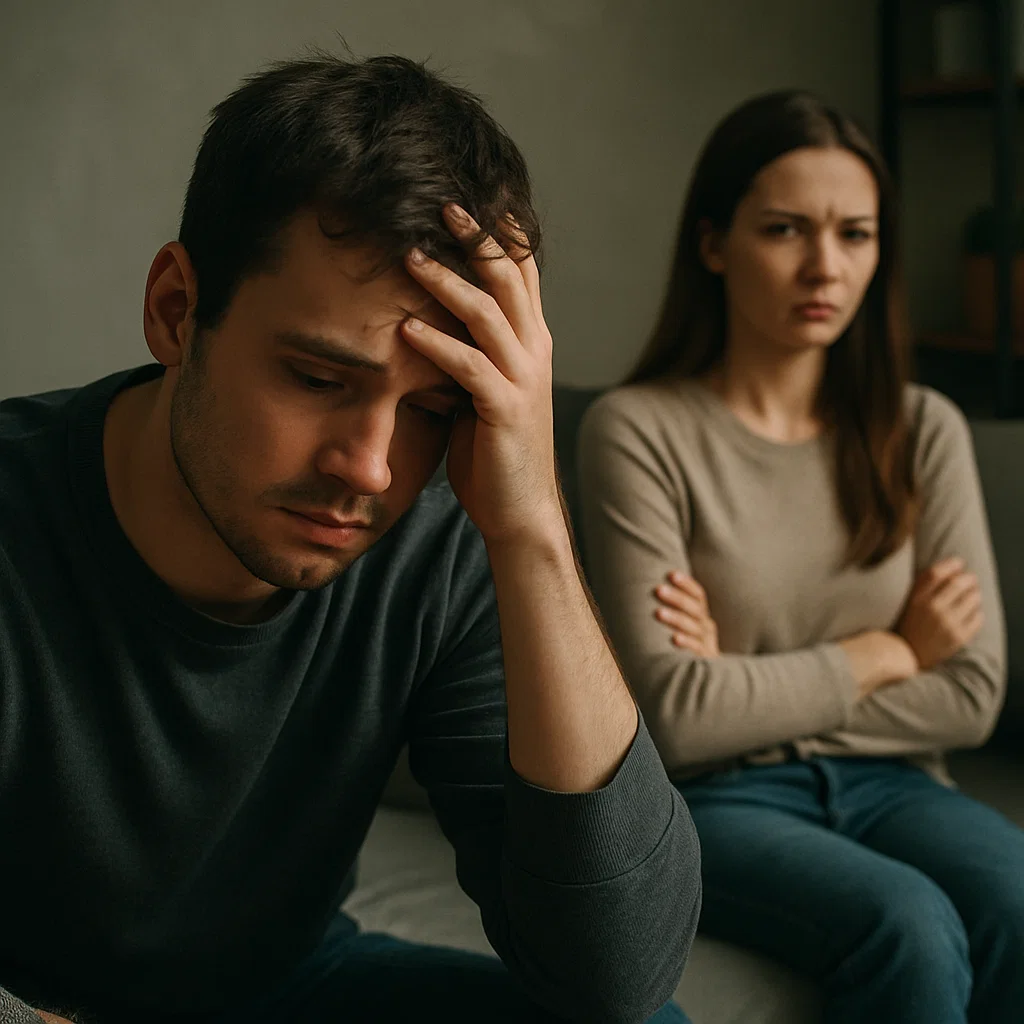
Why Do We Fight So Much Even When We Love Each Other?
It’s very common to hear couples say, “We love each other, but we argue all the time.”
And although it may sound contradictory, the truth is that love does not prevent conflict — it simply changes how we deal with it. Loving someone doesn’t make us immune to frustration, differences, or emotional tension.
From a psychological perspective, arguing can sometimes be a sign of emotional connection. What truly determines whether a relationship grows stronger or becomes worn down is how couples handle these conflicts.
1. Love Does Not Eliminate Differences
When two people come together, they bring their personal histories, beliefs, values, and emotional expression styles. At the beginning of a relationship, these differences are often masked by passion and idealization. Over time, however, they naturally surface — and that’s when disagreements begin to appear.
Psychology refers to this stage as de-idealization, when partners start seeing each other more realistically. This phase is normal, but it requires emotional maturity to understand that loving someone doesn’t mean thinking or feeling the same way about everything.
2. Arguments as Attempts at Connection
Many arguments are not really about what they seem to be — such as schedules, phones, or household chores — but about unmet emotional needs.
Behind irritation, one partner may actually be asking for things like:
“Listen to me.”
“Value me.”
“Give me attention.”
John Gottman, one of the world’s leading relationship researchers, explains that even arguments are often attempts at emotional connection. The problem arises when these attempts are expressed through aggression, defensiveness, or emotional withdrawal.
3. Emotional Wounds and Learned Patterns
From an early age, each person learns how to deal with frustration, anger, and rejection.
Those who grew up in environments where love was mixed with yelling, control, or emotional instability may unconsciously repeat these patterns in adulthood.
Couples therapy helps partners identify these core beliefs and automatic reactions, replacing them with healthier ways of communicating and bonding.
4. When Anxiety Becomes Part of Love
Attachment-related anxiety is another common factor behind frequent conflicts.
People who fear abandonment may become more critical, jealous, or demanding. Others, afraid of being hurt, may shut down emotionally and withdraw.
These two styles often clash: one partner pursues closeness while the other protects themselves by distancing — and conflict becomes inevitable.
Recognizing this cycle is essential to breaking it.
5. Communication: The Real Battleground
What damages relationships is not conflict itself, but the way it is communicated.
Couples who learn to express emotions assertively — without aggression — build bridges instead of walls.
Psychology recommends simple yet powerful strategies, such as:
Talking about feelings rather than assigning blame
Using “I feel” instead of “You always…”
Listening without interrupting
Taking breaks before discussing sensitive topics
These small changes can dramatically reduce both the frequency and intensity of arguments.
6. The Role of Couples Therapy
Couples therapy provides a neutral and safe space where a psychologist helps partners identify behavioral patterns, develop empathy, and strengthen emotional connection.
The goal is not to eliminate all disagreements — that would be unrealistic — but to transform conflict into an opportunity for mutual growth.
7. Loving Also Means Learning How to Disagree Respectfully
Loving someone is an ongoing learning process.
Even on difficult days, it’s important to remember that the person beside you is not the enemy, but your partner — someone who shares the same fundamental desire: to be loved, understood, and respected.
When conflicts are resolved in a healthy way, they deepen intimacy, strengthen trust, and prove that love is stronger than pride.
Final Thoughts
Arguing doesn’t mean love is over. It means strong emotions, unmet needs, and personal histories are colliding.
When couples learn to listen with empathy, respect differences, and express needs without hurting each other, love matures — and the relationship becomes lighter, more authentic, and more enduring.
