
The future of Rio begins in school: how education can break the cycle of violence.
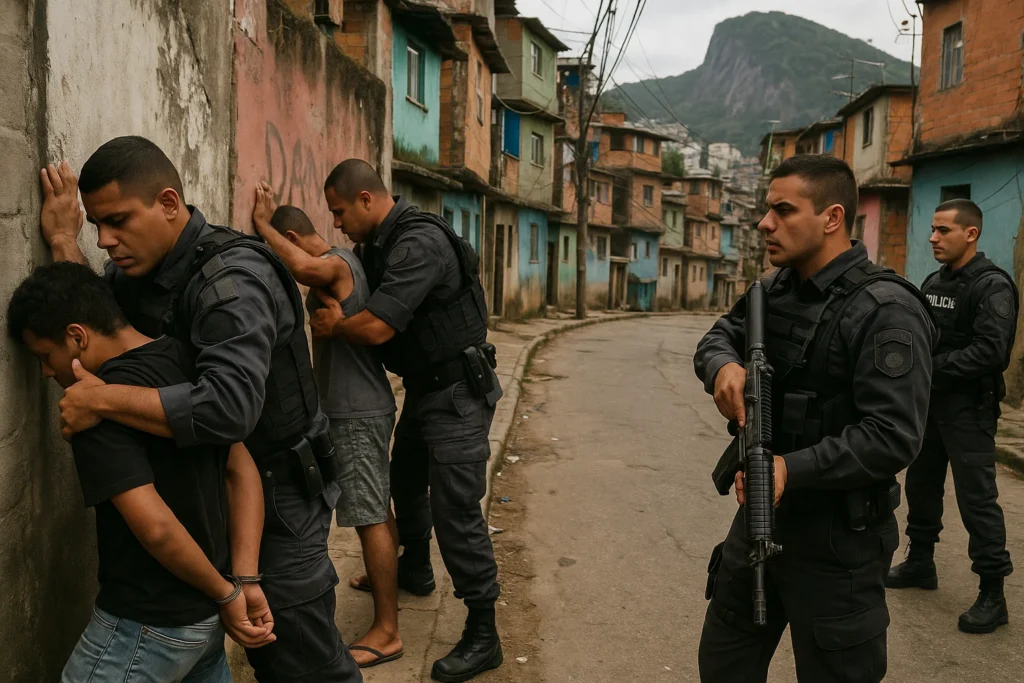
Rio de Janeiro is experiencing one of the most tense periods in its recent history. Large-scale police operations in communities like Complexo do Alemão and Penha have brought to light a painful reality: violence doesn’t arise from nothing. It is the result of years of inequality, a lack of public policies, and a lack of opportunities for new generations.
More than fighting crime, Rio’s challenge is to rebuild hope — and that starts in schools.
Education is the most powerful tool to break the cycle of violence and restore a sense of belonging and purpose in children and teenagers who have grown up in fear.
Violence and its emotional roots
When we look at urban violence solely through the lens of public safety, we fail to see what lies behind it: collective emotional wounds .
Many young people who turn to crime grew up without secure attachment figures, exposed to instability, loss, and trauma. Constant fear shapes the brain and behavior, making impulse, distrust, and the need for immediate survival the primary ways of reacting to the world.
Research in neuropsychology shows that children exposed to chronic violence develop alterations in areas of the brain linked to self-control and empathy. Without emotional support and a supportive school environment, they carry the same pattern of defensiveness and reactivity into adulthood.
Therefore, investing in education in Rio is not just a pedagogical issue—it’s a matter of public mental health .
The role of the school in preventing violence.
School is the first place where children learn to live together, respect rules, develop empathy, and cope with frustration. When this environment is strong, healthy, and affectionate, it acts as an emotional shield against trauma and helplessness.
However, many schools in Rio de Janeiro’s favelas still face a lack of resources, surrounding violence, high dropout rates, and overworked teachers.
The result is an environment that, instead of protecting, sometimes reproduces the chaos that children experience outside the school walls.
Transforming this scenario requires more than just physical reforms. It is necessary to promote emotional and social education —the kind that teaches how to recognize feelings, resolve conflicts through dialogue, and build life goals.
Social-emotional skills programs, such as teaching empathy, self-control, and critical thinking, have shown significant results in countries with similar contexts. In Medellín, Colombia, the reduction in violence only became lasting when the city invested in schools, libraries, and cultural centers within communities previously dominated by fear.
Psychology and education: an essential partnership.
As a psychologist, I see the real turning point as the integration between psychology and education .
School psychological support should not be just for emergencies, but a constant part of daily life. Teachers and administrators need support to deal with challenging behaviors, identify signs of trauma, and create supportive strategies.
The school psychologist, working alongside the teaching staff, can act in a preventative manner:
helping students develop emotional regulation ;
Training teachers in conflict management and empathetic communication ;
strengthening the sense of community and belonging among students;
guiding families to establish more secure and consistent bonds.
These simple actions reduce impulsivity, increase engagement, and gradually change the emotional culture of the school .
When students feel seen, they become capable of dreaming—and those who dream don’t want to destroy, they want to build.
The impact of collective trauma on communities
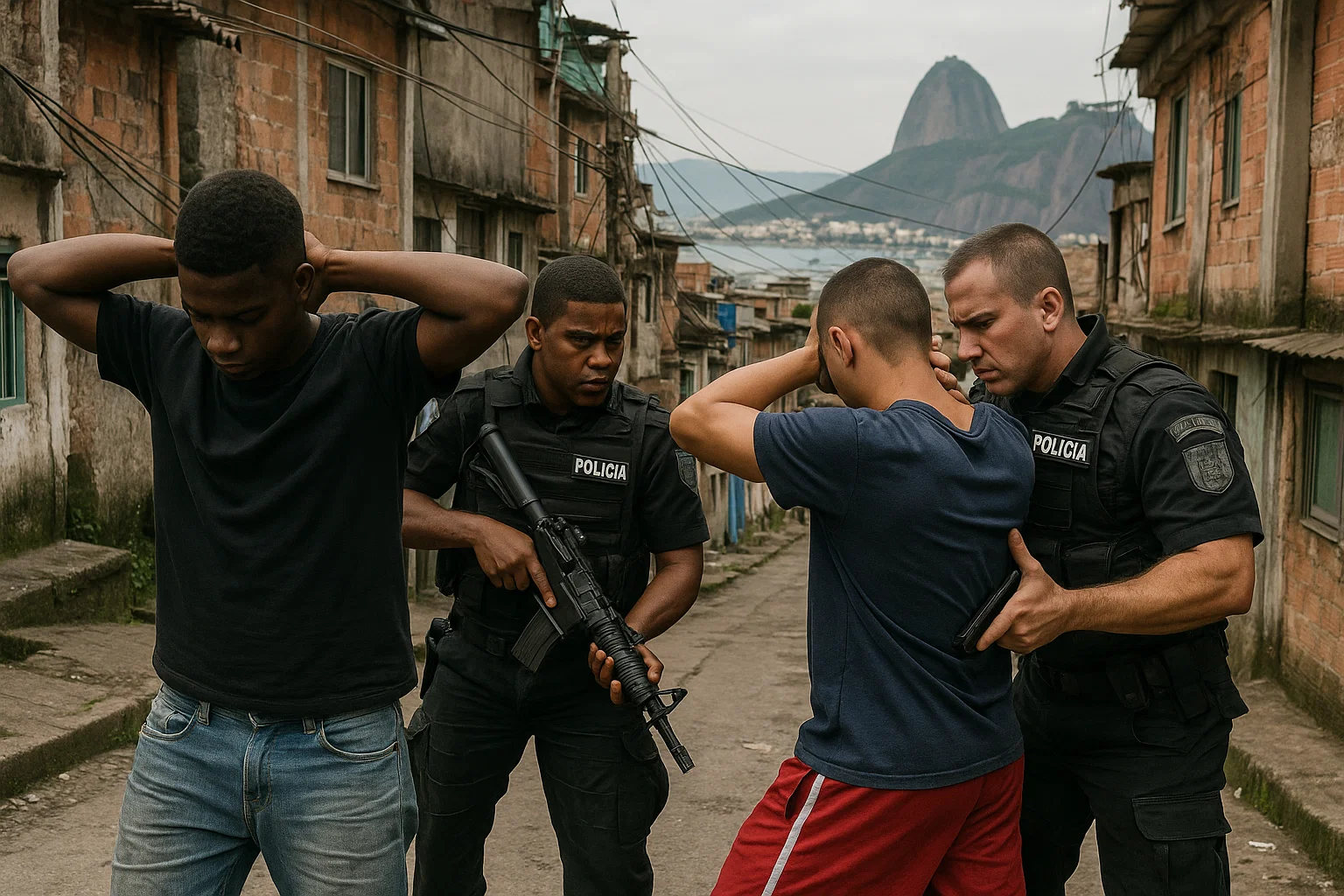
It’s impossible to talk about violence in Rio de Janeiro without mentioning the collective trauma that many communities carry.
Every shooting, every death, and every police operation leaves invisible scars: fear of leaving home, insomnia, anxiety, grief, and distrust of institutions.
These symptoms affect not only the direct victims, but also the children who hear the gunshots, the mothers who wait for their children to return from school, and the teachers who try to teach amidst the tension.
Collective trauma, if left untreated, transforms into hopelessness —and hopelessness fuels violence.
Therefore, the response cannot be solely police-based. It needs to be humane, psychological, and educational .
Education as a public safety policy
Talking about education as a security policy may seem utopian, but the data shows otherwise.
Studies by the Institute for Applied Economic Research (IPEA) indicate that each additional year of schooling significantly reduces the risk of involvement with crime.
Cities that have invested in comprehensive education, sports, culture, and career guidance have seen their violence rates fall consistently.
In Rio de Janeiro, the presence of full-time schools with cultural, sporting, and emotional support activities can function as spaces for rebuilding confidence .
When the school becomes the center of the community, it protects, inspires, and transforms.
Students who discover their talent in theater, soccer, music, or science begin to see value in themselves—and this perception of value is the most powerful antidote against recruitment by drug traffickers.
The role of society and the State
Transforming Rio requires a concerted effort.
The state needs to guarantee security, infrastructure, and access to quality education.
But civil society also has a fundamental role to play—businesses, churches, NGOs, and universities can offer opportunities, mentorship, and cultural projects within the communities.
Psychology, in turn, must continue to be an active voice in promoting collective mental health , helping to rebuild the bonds broken by violence.
The psychologist’s clinical perspective is not limited to the consulting room: it can inspire public policies, guide educators, and shape more conscious and compassionate citizens.
Final considerations
What is happening in Rio de Janeiro is both a warning and an invitation.
A warning that the use of force, by itself, does not bring lasting peace.
And an invitation for a deeper change: investing in people, in childhood, and in education as the foundation of a more just and secure society.
Violence is born where hope dies.
And it is within the school—when a child feels welcomed, learns to trust, and discovers their worth—that hope is reborn.
The future of Rio de Janeiro will not be decided solely in the streets or during police operations.
It will be decided in classrooms, through healing connections and transformative opportunities.
