
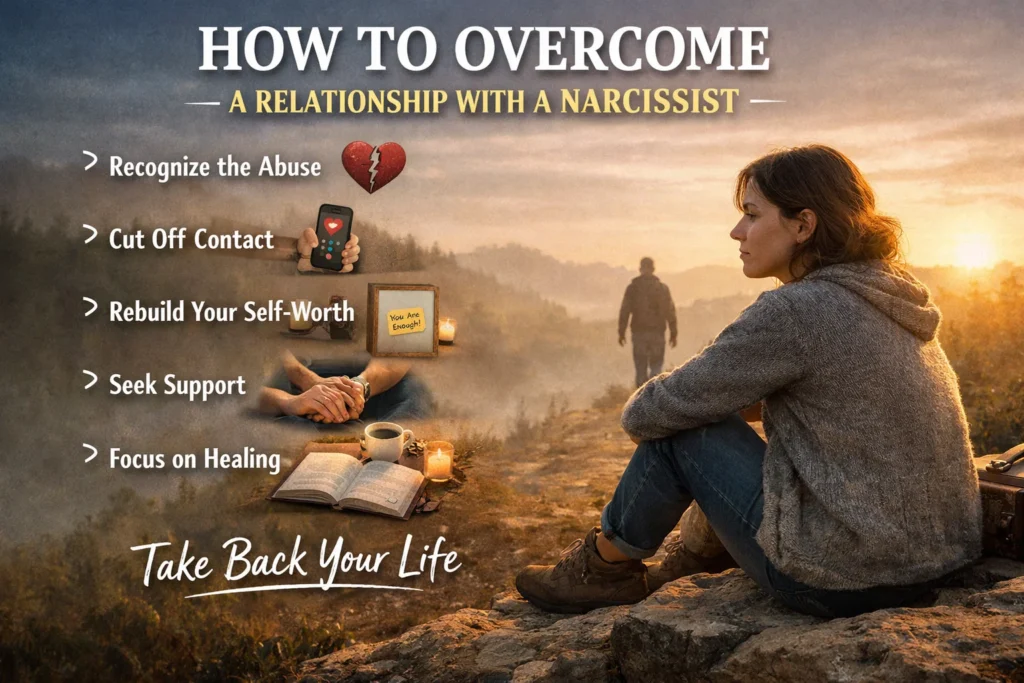
How to overcome a relationship with a narcissistic person: strategies to regain your self-esteem and move on.
Ending a relationship with a narcissistic person can be one of the most challenging and painful experiences in emotional life. This type of bond often leaves deep scars, shaking the victim’s self-esteem, confidence, and even their perception of reality.
In this article, you will understand how to identify the dynamics of a relationship with a narcissistic person, what the psychological impacts of this coexistence are, and, above all, how psychology can help in the process of overcoming and emotional reconstruction.
What is a relationship with a narcissistic person like?
A relationship with a narcissistic person is characterized by an unequal dynamic, in which one partner constantly seeks control, admiration, and validation, while the other ends up feeling exhausted, devalued, and confused. Narcissistic personality disorder
involves persistent patterns of grandiosity, a need for admiration, and a lack of empathy. In a romantic context, this can manifest through behaviors such as emotional manipulation, constant criticism, gaslighting (making the other person doubt their own perception), and covert psychological abuse.
Key signs of a relationship with a narcissist.
Some common behaviors in narcissistic people include:
Idealization phase: initially, the narcissistic partner appears charming, attentive, and loving, creating an intense and rapid connection.
Devaluation phase: over time, subtle criticisms, comparisons, and displays of indifference begin.
Emotional control: uses guilt, fear, or silence as a way to manipulate.
Gaslighting: makes the victim doubt their own memory or interpretation of the facts.
Isolation: attempts to isolate the partner from friends and family in order to maintain control.
Reverse blame: always portrays oneself as the victim and shifts responsibility for one’s mistakes onto others.
These attitudes generate mental confusion, emotional dependence, and often symptoms of anxiety, depression, and low self-esteem.
Psychological impacts of an abusive relationship with a narcissist.
Living with a narcissist is emotionally exhausting. The victim begins to doubt themselves, believes they are never enough, and may develop a constant fear of rejection.
Among the main effects are:
Low self-esteem and feelings of inadequacy.
Difficulty trusting again.
Anxiety and emotional hypervigilance.
Excessive guilt and shame.
Feeling of emptiness and loss of identity.
Constant manipulation and the cycle of idealization and devaluation slowly erode self-confidence. Therefore, the breakup, while liberating, can also trigger anguish, loneliness, and a strong desire to return to the relationship—which is common in cases of emotional dependency.
Why is it so difficult to break free from a narcissist?
The difficulty in breaking away from a narcissistic person is related to a traumatic bond . This type of bond forms when moments of affection and abuse alternate, creating an emotional rollercoaster that traps the victim.
The brain becomes accustomed to this cycle and begins to release dopamine during the “emotional reward” phases, reinforcing the attachment. This is why, even after recognizing the abuse, many people return to the relationship or experience emotional relapses.
How can psychology help overcome a relationship with a narcissist?
Psychotherapy is fundamental in this recovery process. Psychological support helps rebuild self-esteem, identify dysfunctional emotional patterns, and develop emotional protection strategies.
Some areas of focus in therapy include:
Identity reconstruction: the patient is helped to rediscover their likes, values, and boundaries.
Strengthening self-esteem: with cognitive and behavioral techniques, it is possible to reframe negative beliefs and regain self-confidence.
Breaking the cycle of emotional dependency: the psychologist helps in understanding the mechanisms that bind the individual to the relationship.
Emotional self-care: learning to recognize and validate one’s own emotions is essential to the healing process.
Therapies such as Cognitive Behavioral Therapy (CBT) and Schema Therapy are quite effective in rebuilding emotional security and developing new relational patterns.
Practical tips for moving forward
Accept the end without seeking justifications.
Narcissists rarely acknowledge their mistakes. Seeking closure can maintain the bond.Avoid unnecessary contact.
“No contact” is an essential strategy for regaining emotional autonomy.Surround yourself with trustworthy people.
Reconnecting with friends and family helps rebuild your support network.Practice self-care daily.
Simple activities, such as exercise, hobbies, and rest, strengthen well-being.Seek professional help.
A psychologist can offer emotional support and tools to cope with relapses.
Overcoming is possible.
Breaking up with a narcissistic person requires strength and patience. Emotional recovery doesn’t happen overnight, but it’s entirely possible. With self-knowledge, therapy, and support, it’s feasible to rebuild trust and return to healthy relationships based on respect, empathy, and reciprocity.
Final considerations
Overcoming a relationship with a narcissistic person is a process that involves recognizing the abuse, reclaiming one’s own identity, and rebuilding self-confidence. Psychotherapy plays an essential role in this journey, helping the victim understand what happened, develop new boundaries, and break free from patterns of emotional dependence.
The good news is that, with time and the right help, it’s possible to break free emotionally and rediscover love—starting with self-love.
