
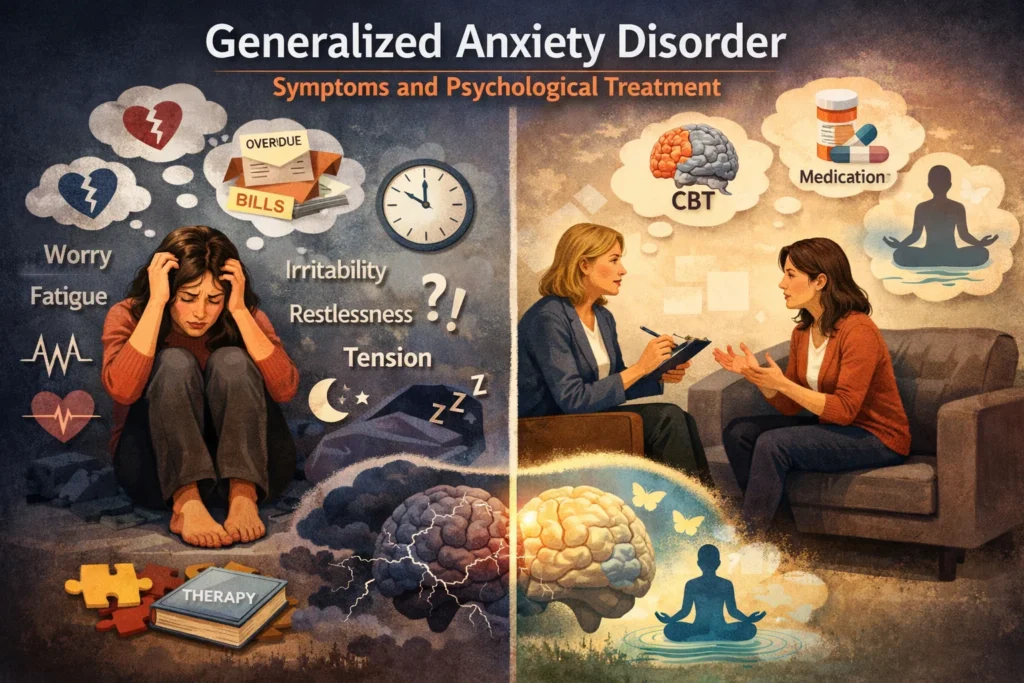
Generalized Anxiety Disorder: Symptoms and Psychological Treatment
Anxiety is a natural and necessary emotion for human survival. However, when it becomes constant, intense, and without apparent reason, it can transform life into a cycle of uncontrollable worries. This condition is known as Generalized Anxiety Disorder (GAD) , one of the most common psychological conditions today.
Many people with this disorder describe a feeling of “racing mind”—a constant state of alertness, as if something bad is about to happen. This interferes with sleep, work, relationships, and quality of life.
In this article, you will understand what generalized anxiety disorder is , what its main symptoms and causes are , and how psychology can help in the treatment and control of anxiety .
What is generalized anxiety disorder?
Generalized Anxiety Disorder (GAD) is characterized by excessive and persistent worries about various aspects of life—such as health, work, finances, and relationships—even when there are no real reasons for such apprehension.
According to the Diagnostic and Statistical Manual of Mental Disorders (DSM-5) , GAD is defined as chronic anxiety that lasts for at least six months and is difficult to control.
People with GAD often experience:
Constant fear that something bad will happen;
Difficulty relaxing or “switching off the mind”;
Irritability and mental fatigue;
Physical sensations of tension and discomfort.
Although anyone can experience periods of worry, in the case of GAD (Generalized Anxiety Disorder), this worry is intense, disproportionate, and long-lasting , interfering with daily functioning.
Main symptoms of generalized anxiety disorder
The symptoms of GAD manifest in three main dimensions: emotional, physical, and behavioral .
1. Emotional symptoms
Excessive and disproportionate concern in relation to reality;
Difficulty controlling anxious thoughts;
Constant fear, even in ordinary situations;
A feeling of being “on edge” or about to lose control.
2. Physical symptoms
Muscle tension and body aches;
Constant fatigue and weakness;
Sweating and tachycardia;
Shortness of breath and gastrointestinal discomfort;
Difficulty falling asleep or restless sleep.
3. Behavioral symptoms
Avoid situations that could cause concern;
Difficulty concentrating;
Constant need to seek security or guarantees;
Irritability and emotional outbursts in stressful situations.
These symptoms vary from person to person, but the pattern is always the same: continuous and difficult-to-control anxiety .
Causes of generalized anxiety disorder
Generalized Anxiety Disorder (GAD) results from a combination of biological, psychological, and environmental factors . No single factor is responsible, but the combination of them increases the likelihood of developing the disorder.
1. Genetic factors
Research indicates that anxiety may have a genetic predisposition. People with a family history of anxiety or depressive disorders have a higher risk of developing GAD (Generalized Anxiety Disorder).
2. Neurochemical factors
Imbalances in neurotransmitters such as serotonin, dopamine, and norepinephrine affect the regulation of mood and emotions, contributing to the onset of anxiety.
3. Psychological factors
Traumatic experiences, excessive self-criticism, perfectionism, and a need for control are traits frequently observed in people with GAD (Generalized Anxiety Disorder).
4. Environmental factors
Stressful situations, such as work overload, financial difficulties, family problems, and lack of social support, can trigger or worsen the disorder.
Difference between normal anxiety and generalized anxiety disorder
It’s important to understand that not all anxiety is pathological . Normal anxiety is an adaptive reaction—for example, feeling apprehensive before a job interview.
In Generalized Anxiety Disorder , fear and worry become disproportionate and constant, even without a real cause. The brain remains in a state of permanent alert, generating physical and emotional exhaustion.
If anxiety is disrupting your sleep, productivity, and social relationships, it’s a sign that it’s time to seek psychological help.
How does generalized anxiety disorder affect daily life?
Generalized Anxiety Disorder (GAD) can compromise various aspects of daily life. The anxious mind creates catastrophic scenarios and anticipates problems that may never happen.
This can lead to:
Chronic insomnia due to constant worry;
Difficulty concentrating , which impacts work performance;
Conflicts in relationships , due to irritability and the need for control;
Persistent physical symptoms , such as muscle pain and fatigue.
Over time, the body enters a cycle of exhaustion, and the person feels they have lost control over their own life.
Psychological treatment for generalized anxiety disorder.
The good news is that GAD is treatable and can be successfully managed , especially through psychotherapy.
1. Cognitive Behavioral Therapy (CBT)
CBT is one of the most effective approaches in treating GAD. It helps the patient to:
Identify distorted thoughts and dysfunctional beliefs;
Replace negative patterns with more realistic thoughts;
Develop strategies to cope with situations that cause anxiety;
Learn relaxation and emotional regulation techniques.
2. Acceptance and Commitment Therapy (ACT)
ACT encourages patients to accept their emotions instead of fighting against them. The focus is on living in accordance with their values , even in the face of anxiety, promoting greater balance and well-being.
3. Mindfulness and breathing techniques
Mindfulness practices help reduce mental rumination and stress. Deep breathing and muscle relaxation exercises are also valuable resources in managing symptoms.
4. Medication support
In some cases, a psychiatrist may recommend the use of anxiolytics or antidepressants, always in conjunction with psychotherapy. Medication does not replace therapy , but it can help with emotional stabilization.
Practical strategies for dealing with anxiety in everyday life.
In addition to psychological support, some actions can help control the disorder:
Maintain a balanced routine with regular sleep and meal times;
Avoid excessive consumption of caffeine and alcohol , which increase anxiety;
Engage in regular physical activity , as it releases endorphins and reduces stress;
Cultivate moments of leisure and rest , disconnecting from obligations;
Practice self-compassion , recognizing your limits and avoiding harsh self-criticism.
These small changes, combined with psychotherapy, contribute to a lighter and more balanced life.
When to seek psychological help
It’s important to seek help from a psychologist when anxiety starts to:
Interfering with sleep or eating;
To impair professional performance;
To generate frequent physical symptoms;
To prevent concentration and relaxation;
To affect personal relationships.
Early treatment prevents the condition from worsening and allows for a faster and more effective recovery.
Final considerations
Generalized Anxiety Disorder is a condition that deserves attention and care. Although it causes suffering and distress, psychological treatment offers powerful tools to restore emotional balance and well-being.
With the right support, it’s possible to learn to manage anxiety, understand its origins, and reframe the automatic thoughts that fuel it. Seeking help is not a sign of weakness—it’s an act of courage and self-care.
If you identify with the symptoms described, know that there are paths to a more peaceful, present, and mindful life.
