
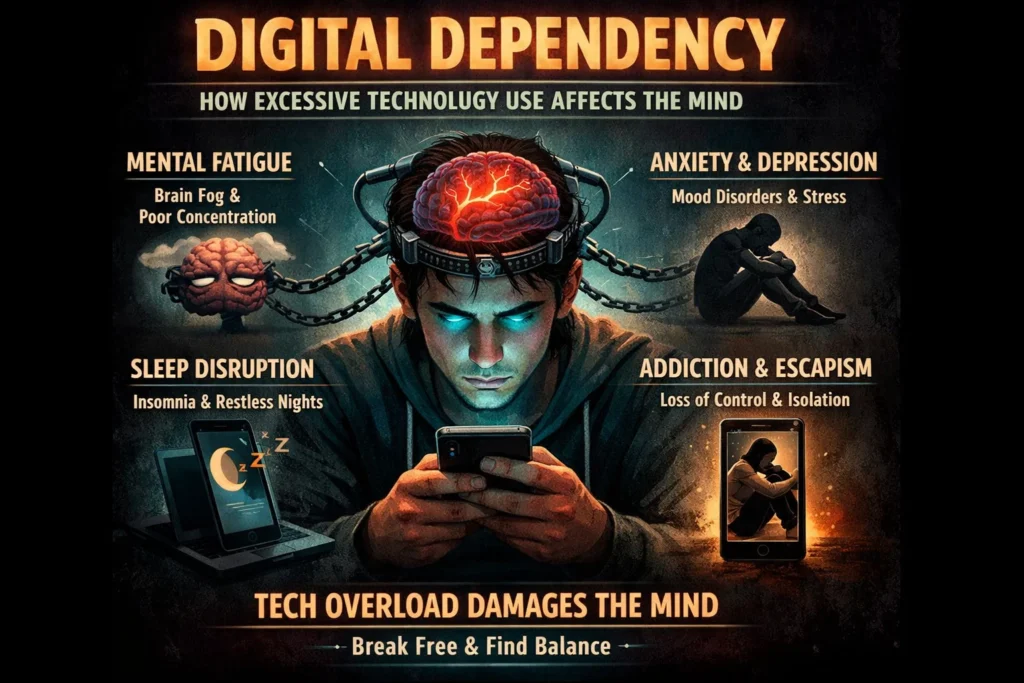
Digital addiction: how excessive technology use affects the mind.
What is digital addiction?
Digital addiction is an increasingly common phenomenon in modern society. It refers to the excessive and uncontrolled use of technological devices, such as cell phones, social networks, video games, and computers, which negatively interferes with an individual’s personal, professional, and emotional life.
Although technological advancements have brought numerous benefits, such as ease of communication and quick access to information, excessive use can have significant impacts on the mind and behavior . When an individual begins to feel anxiety, irritation, or emptiness when without internet access, it is a sign that something is out of balance.
Psychology plays an essential role in understanding and treating this addiction, helping individuals regain control over their technology use and develop healthier habits.
Signs that technology is becoming an addiction.
Not all heavy internet use indicates digital addiction. However, there are some warning signs that suggest problematic behavior:
Excessive and compulsive use: difficulty limiting online time, even when it negatively impacts work, studies, or personal relationships.
Disconnection anxiety: a feeling of nervousness, irritability, or distress when there is no internet access.
Neglecting other activities: abandoning hobbies, physical activities, and social interactions outside the digital environment.
Changes in sleep patterns: staying connected late and sleeping poorly, resulting in constant fatigue.
Low productivity and distraction: difficulty concentrating and staying focused on tasks without checking your phone or social media.
Social isolation: replacing face-to-face interaction with exclusively virtual interactions.
These symptoms indicate that the use of technology has ceased to be functional and has taken on a central role, interfering with daily routines and psychological well-being.
How digital addiction affects the mind
The human brain is programmed to seek rewards and avoid discomfort. Social networks, apps, and games are designed precisely to exploit this mechanism. Each like, notification, or message generates a release of dopamine , the neurotransmitter of pleasure.
Over time, the brain gets used to these rapid stimuli and begins to demand increasingly larger doses to feel the same satisfaction. It’s the same process that occurs in other forms of addiction, such as chemical or behavioral addiction.
This cycle of constant pleasure and frustration directly affects mental health. Among the most common effects are:
Anxiety and stress: caused by the need to always be connected or by comparing oneself to others on social media.
Depression: excessive exposure to “perfect” lives and the relentless pursuit of validation can lead to feelings of inadequacy and sadness.
Attention deficit: the continuous use of multiple screens reduces the ability to concentrate and focus.
Insomnia and mental fatigue: the blue light emitted by screens impairs melatonin production and affects sleep.
Low self-esteem: social comparison and dependence on likes impact self-perception and sense of personal worth.
Digital addiction among young people and adults
Although digital addiction can affect people of all ages, teenagers and young adults are more vulnerable. This age group tends to seek social acceptance and recognition, and social media becomes a space where this validation happens in real time.
For many, online life becomes more meaningful than real life. The fear of “missing out” ( FOMO) generates a constant need to check notifications, which fuels the cycle of anxiety.
Among adults, digital addiction manifests itself in a more subtle way—often masked as productivity. Excessive use of cell phones to check emails, follow news, or monitor professional networks can lead to mental exhaustion and burnout.
The impact on interpersonal relationships
Technology, which should bring people closer together, often creates emotional distance . Couples, friends, and family members are spending more and more time looking at screens than exchanging glances and meaningful conversations.
Compulsive use of social media can also fuel jealousy, comparisons, and conflict in romantic relationships. Constant exposure to idealized content can lead individuals to feel that their life or partner “isn’t good enough.”
Furthermore, digital isolation reduces human contact, a fundamental element for the development of empathy and emotional regulation. This emotional disconnection, although silent, is one of the most worrying consequences of technological dependence.
The psychology and treatment of digital addiction.
Psychotherapy is one of the main forms of treatment for digital addiction. The goal is not to eliminate the use of technology, but to restore balance .
The most effective approaches include:
1. Cognitive Behavioral Therapy (CBT)
CBT helps patients recognize the triggers that lead to excessive use—such as boredom, anxiety, or loneliness—and develop strategies to replace them with healthier behaviors. For
example, learning to cope with stress without resorting to social media is an essential step in the recovery process.
2. Mindfulness
Mindfulness teaches individuals to be present in the moment, reducing impulsivity and automatic digital behavior. This technique is useful for increasing awareness of time spent online and reconnecting with the real world.
3. Psychodynamic psychotherapy
This approach seeks to understand the unconscious motivations behind addiction, such as feelings of emptiness, emotional deprivation, or a need for recognition. It helps the patient develop a more stable sense of identity, without depending on digital validation.
4. Family intervention
Often, digital addiction is a problem that involves the entire family system. Guiding parents and caregivers on usage limits, schedules, and offline interaction is fundamental to breaking the cycle.
Practical strategies to reduce digital addiction
In addition to psychotherapy, some simple actions can help restore balance in technology use:
Set schedules for using cell phones and social media.
Avoid using screens before bed.
Disable non-essential notifications.
Engage in outdoor activities and offline hobbies.
Establish periods of disconnection, such as “Sundays without cell phones”.
Replace passive consumption with real and productive interactions.
These practices promote reconnection with the real world, self-control, and emotional well-being.
The importance of balance
We live in a digital age where technology is indispensable. It facilitates work, study, and leisure. However, it’s important to remember that technology should serve humanity, not the other way around .
Learning to use devices consciously is a daily exercise in self-awareness and self-control — values widely explored in psychology. When there is balance, the use of technology becomes an ally in personal growth, not an obstacle.
Final considerations
Digital addiction is a real and growing problem, with profound impacts on the mind, emotions, and relationships. However, with psychological support, self-reflection, and conscious disconnection practices, it is possible to regain control and live a healthier relationship with the digital world.
Psychology offers valuable tools for understanding behavioral patterns, reframing the use of technology, and restoring mental and emotional well-being.
