

Anxiety disorders in children: causes, treatment, and how psychology can help.
Anxiety disorder in children is a condition that affects emotional well-being, behavior, and even the academic and social development of young children. While feeling fear or worry in some situations is natural in childhood, when anxiety is intense, frequent, and interferes with daily activities, it can become a disorder that requires attention.
In this article, we will discuss the main causes, symptoms, forms of treatment, and how psychology can help in the recovery process.
What are the causes of anxiety in children?
Childhood anxiety can have multiple origins, including genetic, environmental, and emotional factors. Some of the main causes are:
✔️ Unstable family environment: conflicts between parents, separation, or recent losses can generate insecurity;
✔️ Excessive pressure: children who are pressured too much to have good academic or behavioral performance may develop anxiety;
✔️ Trauma: situations such as accidents, changing schools, or bullying can trigger the disorder;
✔️ Genetic predisposition: children of anxious parents are more likely to develop the problem.
Clinical example: An 8-year-old child began experiencing stomach aches and frequent crying before going to school, due to fear of being rejected by classmates.
Main symptoms of anxiety disorder in children
The signs can vary depending on age and type of anxiety, but the most common include:
Excessive and irrational fears;
Refusal to attend school without apparent reason;
Difficulty sleeping alone;
Irritability and crying spells;
Physical complaints such as headache or stomach ache;
Excessive concern about the future or the safety of parents.
In addition, the child may exhibit avoidance behaviors, such as not wanting to leave the house or participate in social activities.
How can psychology help in the treatment of anxiety in children?
Psychological intervention is essential for children to learn to cope with fear and anxiety in a healthy way. The relationship between psychology and anxiety in children is one of the main areas of care in children’s mental health.
1. Cognitive-Behavioral Therapy for Children (CBT)
Adapted CBT for children is one of the most effective approaches. It helps to identify distorted thoughts, work on gradually confronting feared situations, and develop emotional control strategies.
Clinical example: A child who is afraid to sleep alone can be gradually and controllably exposed to this challenge with positive reinforcement.
2. Emotional skills training
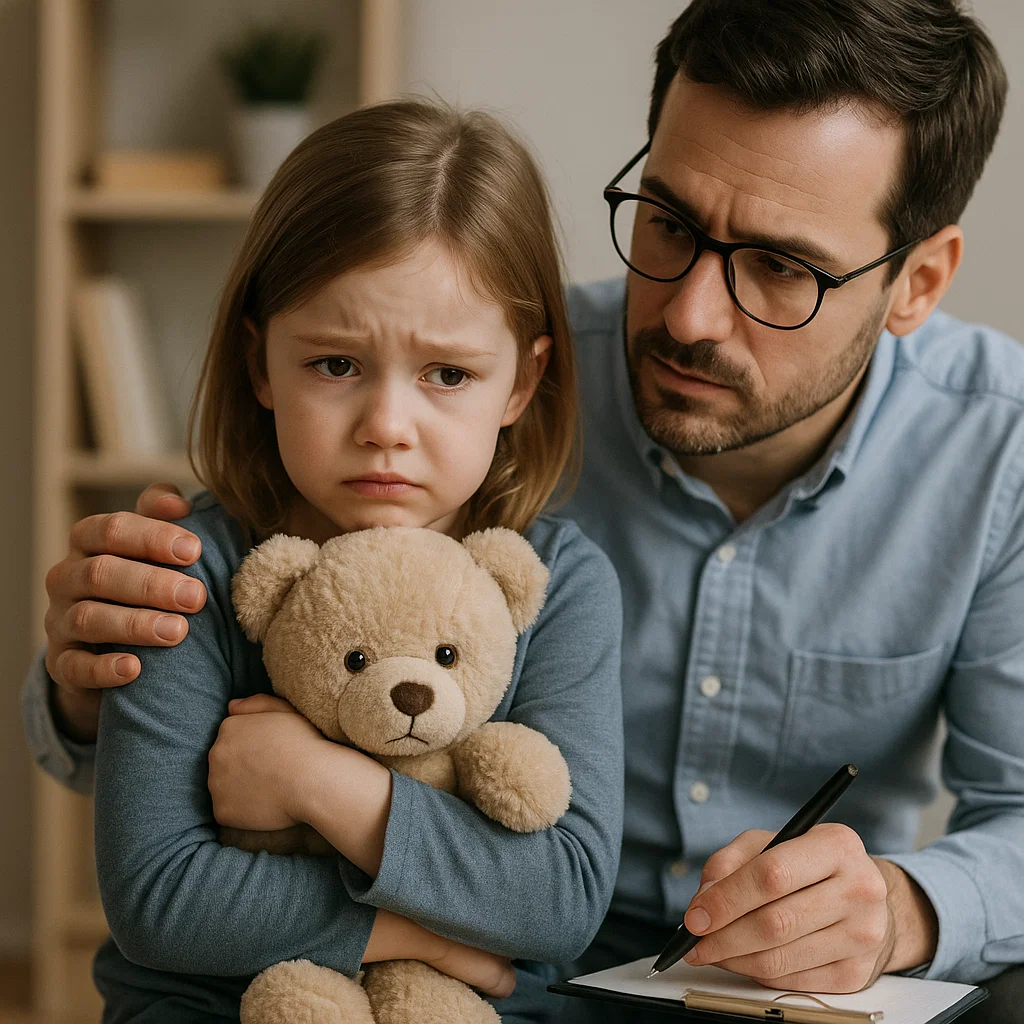
The psychologist teaches the child to recognize and name emotions, as well as develop relaxation and breathing techniques for moments of crisis.
3. Family involvement
Treatment involves providing guidance to parents on how to support the child, avoiding behaviors that reinforce anxiety, such as overprotection.
4. Playful and adapted techniques
Since children have specific characteristics, psychologists use resources such as games, drawings, and stories to facilitate the therapeutic process.
When should you seek professional help?
Seek a specialized psychologist when:
If symptoms persist for more than four weeks;
If there is disruption in school, social, or family activities;
The child is experiencing intense emotional distress;
There are signs of behavioral regression (such as bedwetting again without an apparent physical cause).
Conclusion
Anxiety disorders in children can affect various areas of a child’s life, but with proper psychological support, the results are usually quite positive. Psychology offers tools that help children understand their emotions, face their fears, and regain emotional balance.
If you suspect that your child or a child close to you is suffering from anxiety, seek guidance from a child psychologist.
