
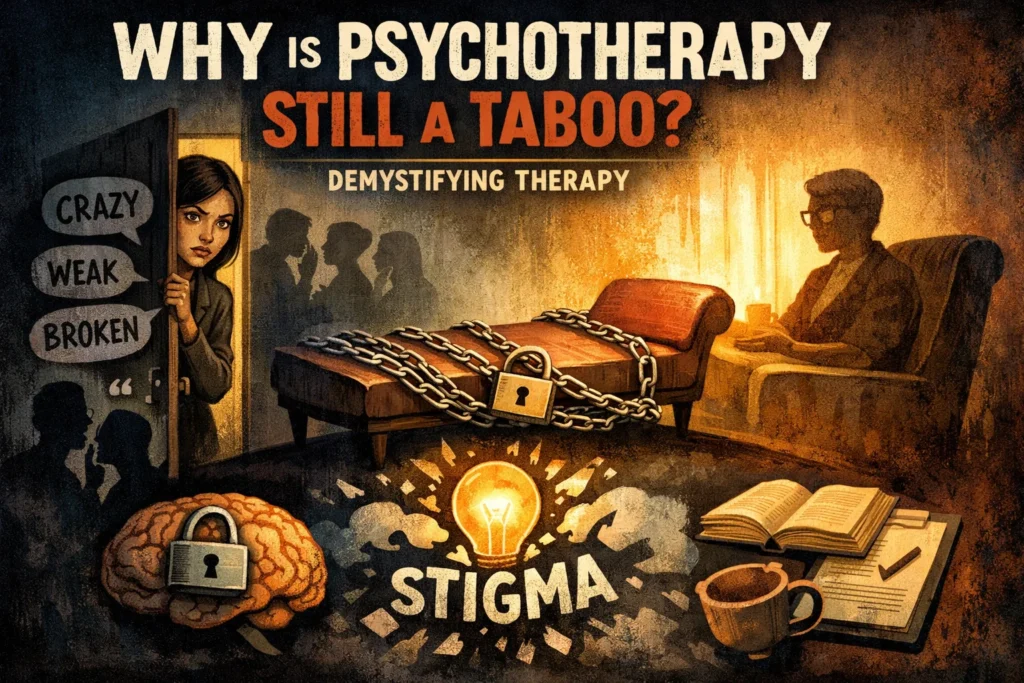
Why is psychotherapy still a taboo? Demystifying therapy.
Although mental health care is gaining more and more space in everyday conversations, the taboo surrounding psychotherapy still persists in many contexts. Whether due to prejudice, lack of knowledge, or fear of judgment, many people avoid seeking psychological help even when they are suffering emotionally.
In this article, we will understand why psychotherapy is still surrounded by myths and how we can demystify therapy, promoting a more welcoming and accessible view of psychological care.
What exactly is psychotherapy?
First of all, it’s important to clarify that psychotherapy is a therapeutic process conducted by a psychologist, with the goal of helping the patient understand their emotions, behaviors, thoughts, and difficulties.
Contrary to what many believe, you don’t need to be in a “critical state” to seek therapy . In fact, psychotherapy can benefit anyone who wants to get to know themselves better, develop emotional skills, or deal with conflicts.
Why does the taboo surrounding psychotherapy still exist?
Despite advancements in mental health, therapy is still viewed with prejudice by many people . Below, we highlight the main reasons that perpetuate this taboo:
1. Social stigma
Unfortunately, there is a misconception that those who seek therapy are “crazy” or emotionally weak. This outdated idea deters many individuals who, for fear of judgment, prefer to suffer in silence.
Furthermore, social stigma contributes to the isolation of those facing disorders such as depression or anxiety. According to the World Health Organization , stigma is one of the biggest obstacles to mental health treatment.
2. Misinformation
Another factor fueling the taboo surrounding psychotherapy is the lack of information about how the therapeutic process works. Many people are unaware that there are different psychological approaches, types of therapy, and formats of care, such as online sessions, for example.
When people don’t understand how therapy works, it’s natural to have resistance or distrust. That’s why mental health education is essential .
3. Culture of self-control
In our society, we are often taught to “handle everything on our own.” Expressing emotional vulnerability can be interpreted as a sign of weakness, which contributes to silencing psychological suffering.
This culture of self-control creates emotional barriers that make it difficult to recognize the need for professional help.
4. Fear of confronting one’s own pain.
Finally, some people avoid psychotherapy for fear of confronting old pains or unresolved traumas. However, the therapeutic process is gradual and respects the patient’s pace, creating a safe space for self-knowledge and transformation.
How to demystify therapy?
Fortunately, there are several ways to break the taboo surrounding psychotherapy and promote a more positive understanding of the importance of this care. Here are some effective strategies:
1. Speak openly about the subject.
When acquaintances talk about their experience with therapy, it helps normalize the process and encourages others to seek help. Breaking the silence is an essential step in dismantling prejudices.
2. Seek reliable sources of information.
Reading content produced by psychologists, watching educational videos, and following professionals in the field on social media are ways to better understand what psychotherapy is. Check out, for example, this article from Fiocruz on mental health .
3. To value mental health care as much as physical health care.
Just as we take care of our bodies with food, sleep, and physical activity, taking care of our minds should be a priority . Psychotherapy is one of the most effective tools for this, helping to prevent disorders and promote quality of life.
4. Educate from an early age
Including topics such as emotions, empathy, and self-care in schools contributes to forming a generation that is more aware of mental health. The sooner this information reaches people, the less chance there is of prejudices being perpetuated.
Psychotherapy: an act of courage, not weakness.
Seeking a psychologist is a sign of emotional responsibility and courage. Facing one’s own pain, deconstructing patterns, and investing in self-knowledge requires maturity and willingness.
Therefore, breaking the taboo surrounding psychotherapy is also an important step towards a more empathetic, healthy, and balanced society .
Conclusion
The taboo surrounding psychotherapy still prevents many people from seeking the support needed to overcome emotional difficulties. However, by demystifying therapy, creating space for dialogue, and disseminating reliable information, we can transform this scenario.
Ultimately, mental health is a serious matter—and deserves care, respect, and support. If you are facing difficulties, don’t hesitate to seek professional help .
