
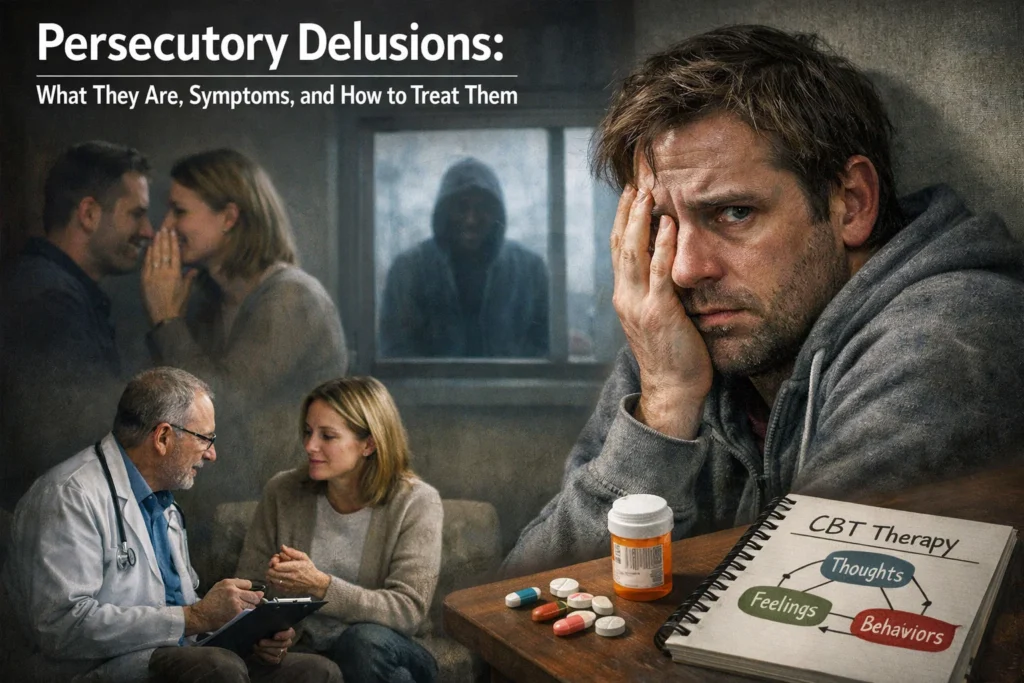
Persecutory Delusions: Understanding Symptoms, Causes, and Treatment
Persecutory delusions represent one of the most distressing experiences in mental health, profoundly affecting how individuals perceive themselves, others, and the world around them. Understanding these experiences is essential for recognizing when someone needs help and for reducing the stigma that often surrounds psychotic symptoms.
What Are Persecutory Delusions?
Persecutory delusions are fixed, false beliefs that one is being targeted for harm, surveillance, conspiracy, or persecution. Despite an absence of credible evidence, these beliefs remain unshakeable and resistant to logical reasoning or contradictory proof. The person experiencing these delusions holds their beliefs with absolute conviction, experiencing them not as paranoid thoughts but as undeniable reality.
These delusions commonly occur in psychotic disorders including schizophrenia, persistent delusional disorder (also called paranoid disorder), and severe mood disorders with psychotic features such as major depressive disorder with psychotic symptoms or bipolar disorder during manic or depressive episodes. They can also emerge in other medical and substance-related conditions affecting brain function.
Individuals with persecutory delusions typically believe they are the target of elaborate conspiracies, deliberate sabotage, surveillance operations, or malicious intentions. The perceived persecutors may include neighbors, coworkers, family members, strangers, corporations, government agencies, or even nebulous entities like “them” or “the system.” The specificity and complexity of these beliefs vary considerably, ranging from relatively circumscribed ideas to elaborate, interconnected conspiracy theories.
Common Manifestations of Persecutory Delusions
The content of persecutory delusions reflects the person’s cultural context, personal experiences, and contemporary concerns. Common themes include:
Believing one is under constant surveillance through hidden cameras, tracking devices, or monitoring technology embedded in everyday objects. Convinced that food, water, or medication is being poisoned or contaminated by malevolent actors intent on causing harm. Perceiving workplace interactions as evidence of coordinated efforts by colleagues to undermine one’s reputation or orchestrate job termination. Interpreting neutral or ambiguous social behaviors—such as strangers glancing in one’s direction or talking quietly—as proof of mockery, gossip, or hostile intent. Certain that neighbors, landlords, or government officials are attempting to break into one’s home, plant surveillance equipment, or intercept communications.
What external observers might dismiss as implausible or irrational feels internally coherent and terrifyingly real to the person experiencing the delusion. These beliefs generate profound emotional distress, fear, and hypervigilance that dominate daily experience.
Recognizing the Symptoms
Beyond the delusional beliefs themselves, persecutory delusions produce a constellation of behavioral, emotional, and interpersonal changes:
Pervasive Mistrust: An overriding suspicion of others’ motives that extends even to close relationships, making genuine connection increasingly difficult.
Progressive Isolation: Withdrawal from social interactions, relationships, and activities as trust erodes and the perceived danger intensifies.
Heightened Emotional Reactivity: Irritability, angry outbursts, or aggressive responses when feeling threatened, cornered, or disbelieved.
Chronic Fear State: Persistent anxiety, hypervigilance, and anticipation of imminent harm that rarely subsides.
Protective Behaviors: Actions designed to ensure safety such as repeatedly checking locks, covering windows, avoiding certain locations, screening calls, or carrying protective objects.
Physiological Disruption: Sleep disturbances stemming from fear and hypervigilance, appetite changes, and physical manifestations of chronic stress.
Functional Impairment: Difficulty maintaining employment, sustaining relationships, managing daily responsibilities, or engaging in previously routine activities.
These symptoms create a self-reinforcing cycle: the delusions generate fear and distrust, which lead to isolation and defensive behaviors, which in turn limit corrective experiences that might challenge the delusional beliefs.
Understanding the Underlying Causes
Persecutory delusions arise from complex interactions among biological, psychological, and environmental factors. Contributing elements include:
Psychiatric Disorders: Schizophrenia spectrum disorders, persistent delusional disorder, schizoaffective disorder, and severe mood disorders with psychotic features represent the primary conditions associated with persecutory delusions.
Substance Use: Psychoactive substances can trigger or exacerbate delusional thinking, particularly stimulants (cocaine, methamphetamine, high-dose amphetamines), hallucinogens, cannabis in vulnerable individuals, and alcohol during intoxication or withdrawal.
Neurological Conditions: Dementia syndromes including Alzheimer’s disease, Lewy body dementia, Parkinson’s disease with dementia, traumatic brain injury, brain tumors, and certain autoimmune or infectious diseases affecting the central nervous system can produce persecutory delusions.
Psychological Trauma and Stress: Severe acute stress, prolonged adversity, or traumatic experiences may precipitate delusional episodes in individuals with underlying vulnerability, particularly when combined with other risk factors.
Neurobiological Factors: Dysregulation in neurotransmitter systems (particularly dopamine pathways), structural brain differences, and genetic predisposition all contribute to vulnerability for developing psychotic symptoms including delusions.
Sensory Impairment: Significant hearing or vision loss, especially in older adults, can increase risk for developing persecutory beliefs as the brain attempts to make sense of incomplete sensory information.
Diagnosis and Comprehensive Evaluation
Accurate diagnosis requires thorough assessment by qualified mental health professionals, typically psychiatrists or clinical psychologists with expertise in psychotic disorders. The diagnostic process includes:
Detailed clinical interviews exploring the content, onset, duration, and impact of delusional beliefs; assessment of associated symptoms including hallucinations, disorganized thinking, mood disturbances, and functional impairment; comprehensive psychiatric and medical history; evaluation of substance use; cognitive and mental status examination; and when indicated, medical workup including laboratory tests, neuroimaging, or other investigations to identify or rule out underlying medical conditions.
This comprehensive approach ensures that treatable medical causes are identified and that the intervention plan addresses the full clinical picture.
Evidence-Based Treatment Approaches
Effective treatment for persecutory delusions typically requires a multifaceted approach combining biological, psychological, and social interventions:
Pharmacological Treatment
Antipsychotic medications represent the cornerstone of treatment for persecutory delusions. These medications modulate dopamine and other neurotransmitter systems to reduce psychotic symptoms including delusions. Both typical (first-generation) and atypical (second-generation) antipsychotics may be prescribed based on symptom profile, medical history, and side effect considerations. Finding the optimal medication and dosage often requires patience and close collaboration between patient and psychiatrist.
Mood stabilizers or antidepressants may be added when delusions occur in the context of mood disorders. Regular monitoring ensures medication effectiveness and manages potential side effects.
Psychotherapeutic Interventions
Cognitive-behavioral therapy for psychosis (CBTp) has demonstrated effectiveness in helping individuals examine their beliefs, consider alternative explanations, reduce associated distress, and develop coping strategies. Unlike traditional approaches that directly challenged delusions, contemporary CBT approaches focus on understanding the beliefs’ meaning and impact, gradually building therapeutic trust, and working collaboratively to reduce distress and functional impairment even when beliefs persist.
Supportive therapy provides a consistent, non-judgmental space for expressing fears and concerns while building therapeutic alliance. Family therapy addresses relational impacts and helps loved ones respond effectively without reinforcing delusions or dismissing the person’s distress.
Psychoeducation and Support
Education for both the individual and their support network about the nature of delusions, treatment expectations, early warning signs of relapse, and strategies for managing symptoms proves essential for long-term success. Psychoeducation helps family members understand that arguing against or dismissing delusional beliefs typically proves counterproductive, while learning to validate emotional distress without confirming delusional content creates more helpful interactions.
Ongoing Monitoring and Relapse Prevention
Long-term follow-up with mental health professionals helps maintain stability, adjust treatment as needed, identify early signs of symptom recurrence, and address emerging challenges. Developing a relapse prevention plan that identifies personal warning signs and specifies actions to take when symptoms intensify can prevent full-blown relapses.
Living Well with Treatment
With appropriate, sustained treatment, many individuals experiencing persecutory delusions achieve significant symptom reduction and functional improvement. While some may experience complete remission, others learn to manage persistent symptoms effectively through medication, therapy, and coping strategies. Many return to work or school, rebuild relationships, pursue meaningful activities, and experience substantial quality of life improvements.
The trajectory varies considerably among individuals depending on the underlying condition, treatment responsiveness, adherence to treatment, access to support systems, and individual resilience. Early intervention, comprehensive treatment, and strong therapeutic relationships consistently predict better outcomes.
Moving Toward Understanding and Support
Persecutory delusions represent genuine psychiatric symptoms requiring compassionate, evidence-based care rather than judgment or dismissal. These experiences profoundly impact individuals’ sense of safety, relationships, and daily functioning, causing real suffering that deserves empathetic response.
If someone in your life exhibits signs of persecutory thinking—expressing unfounded fears of persecution, demonstrating marked changes in behavior or personality, or withdrawing due to fear or mistrust—encourage them to seek evaluation from mental health professionals. Approach these conversations with concern rather than confrontation, focus on the distress and impact rather than the truthfulness of beliefs, and offer to help connect them with appropriate care.
Recovery is possible, and treatment works. The sooner individuals receive appropriate support, the better their prospects for managing symptoms and reclaiming their lives. Mental health challenges, including psychotic symptoms, are medical conditions deserving the same compassion, dignity, and effective treatment as any other health concern.
