
Couples Therapy: Strengthening Relationships Through Professional Support
Every relationship encounters challenges. Whether navigating major transitions, managing recurring conflicts, or simply seeking deeper connection, couples therapy offers a structured, supportive pathway for partners to understand each other more fully and build the relationship they envision together.
Understanding Couples Therapy
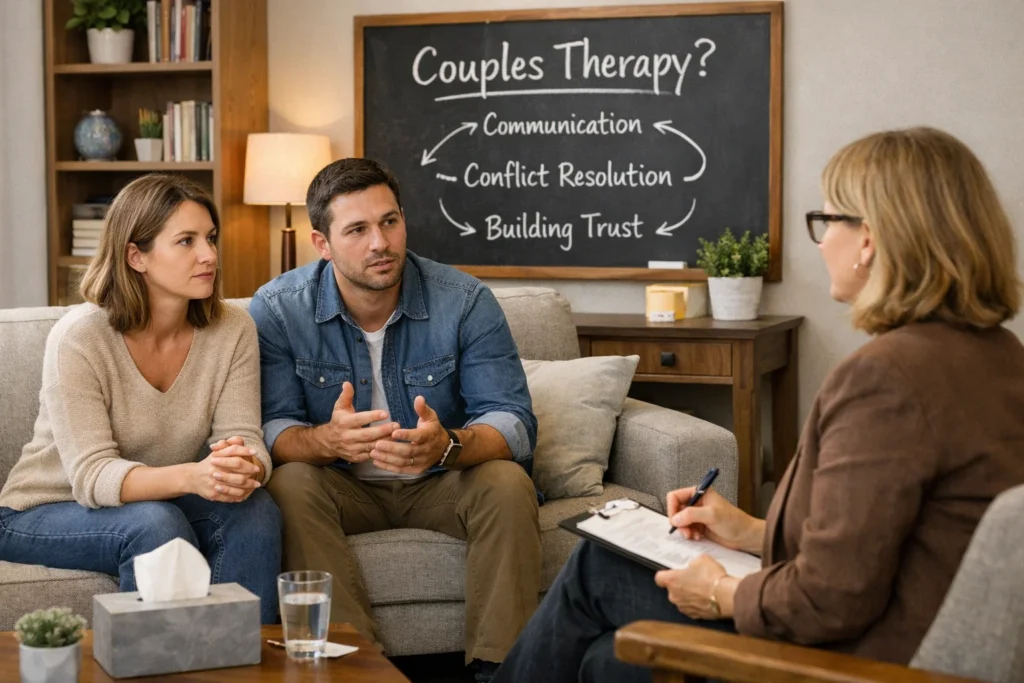
Couples therapy, also known as relationship counseling or marriage therapy, is a specialized form of psychotherapy designed to help partners enhance communication, resolve conflicts constructively, and deepen their emotional connection. Facilitated by a trained therapist with expertise in relational dynamics, this therapeutic approach creates a neutral, confidential space where both partners can express themselves authentically while working through the issues affecting their relationship.
Unlike individual therapy, which focuses on one person’s internal experiences and personal growth, couples therapy centers on the relationship itself. The therapist helps partners examine their interaction patterns, communication styles, conflict resolution approaches, and the underlying needs, fears, and expectations each person brings to the relationship. The goal isn’t to assign blame or identify who’s “right” or “wrong,” but rather to illuminate how both partners contribute to relational patterns—both constructive and problematic—and to develop more effective ways of relating.
Recognizing When Couples Therapy Might Help
Determining when to seek professional support for your relationship isn’t always straightforward. Many couples wait until they’re in crisis mode, but therapy can be beneficial at various stages and for diverse reasons. Common indicators that couples therapy could be valuable include:
Communication Breakdown: Conversations frequently escalate into arguments, or alternatively, partners avoid meaningful dialogue altogether, creating emotional distance through silence and withdrawal. When genuine understanding feels impossible and attempts at connection consistently misfire, therapeutic intervention can help rebuild communicative pathways.
Persistent Conflict Patterns: The same disagreements resurface repeatedly without resolution, creating a sense of futility and frustration. These cyclical conflicts often signal deeper, unaddressed issues that require exploration beyond surface-level complaints.
Trust Disruptions: Experiences of infidelity, betrayal, significant dishonesty, or pervasive jealousy and suspicion erode the foundation of safety and security essential for healthy relationships. Rebuilding trust after such ruptures typically requires professional guidance.
Intimacy Concerns: Physical and emotional intimacy may diminish, manifesting as reduced sexual connection, decreased affection, reluctance to be vulnerable, or feeling more like roommates than romantic partners. This distancing often reflects unresolved conflicts, communication issues, or individual struggles affecting the relationship.
Values and Goals Misalignment: Partners find themselves increasingly divergent regarding fundamental life directions—whether about parenting approaches, financial priorities, career decisions, lifestyle preferences, or core values. When these differences create impasse rather than complementarity, therapy can help navigate these challenging territories.
Considering Separation: When one or both partners contemplate ending the relationship but feel ambivalent or wish to explore whether the relationship can be salvaged, therapy provides a structured environment for making this significant decision with greater clarity.
Life Transitions: Major changes such as becoming parents, career shifts, relocations, health challenges, or caring for aging relatives can strain even strong relationships. Proactive therapeutic support during transitions can prevent difficulties from becoming entrenched problems.
Importantly, couples need not be in crisis to benefit from therapy. Many partners seek counseling preventatively—to strengthen already-good relationships, develop more sophisticated communication skills, align expectations before marriage, or proactively address potential challenges. Just as individuals might work with a personal trainer to optimize physical health, couples can engage therapy to optimize relational health.
The Therapeutic Process
While therapeutic approaches vary based on the therapist’s training and the couple’s specific needs, couples therapy typically unfolds through several phases:
Initial Assessment and Goal Setting
The therapist conducts a comprehensive assessment, meeting with both partners together and sometimes individually. This process explores the relationship history, current concerns, individual backgrounds, previous attempts at resolution, and what each partner hopes to achieve through therapy. Clear, collaborative goal-setting establishes direction and creates benchmarks for measuring progress.
Pattern Recognition and Understanding
The therapist helps partners identify recurring interaction patterns—how conflicts typically escalate, what triggers defensiveness or withdrawal, how past experiences influence current reactions, and where positive cycles might be strengthened. This awareness creates opportunities for interrupting unhelpful patterns and cultivating more constructive alternatives.
Communication Enhancement
Effective communication forms the foundation of healthy relationships. Therapy teaches skills including active listening (truly hearing rather than preparing rebuttals), expressing needs and feelings clearly without blame or criticism, validating partner’s experiences even when perspectives differ, asking questions to deepen understanding, and navigating difficult conversations without destructive conflict.
Conflict Resolution Skills
Rather than eliminating disagreements—an unrealistic goal in any relationship—therapy focuses on managing conflicts constructively. Partners learn to identify core issues beneath surface complaints, express emotions appropriately without attacking character, negotiate compromises that honor both people’s needs, repair connection after conflicts, and recognize when to pause heated discussions and return when calmer.
Deepening Emotional Connection
Beyond resolving problems, therapy nurtures the positive aspects of relationships. This includes rekindling affection and appreciation, creating rituals of connection, understanding each partner’s emotional needs and attachment style, rebuilding intimacy—both emotional and physical, cultivating shared meaning and purpose, and developing positive interaction habits that strengthen the relationship foundation.
Individual Work Within Relational Context
Sometimes couples therapy reveals individual issues—such as unresolved trauma, mental health concerns, or deeply ingrained patterns from family of origin—that require attention. Therapists may recommend concurrent individual therapy or devote some session time to helping each partner with personal work that ultimately benefits the relationship.
Sessions typically occur weekly, lasting fifty minutes to an hour, though frequency may vary based on need and progress. Many therapists now offer teletherapy options, making couples counseling more accessible regardless of location or scheduling constraints.
The Transformative Benefits
Couples therapy offers numerous potential benefits that extend well beyond immediate conflict resolution:
Enhanced Mutual Understanding: Partners develop deeper appreciation for each other’s perspectives, experiences, and emotional landscapes, even when they differ significantly.
Improved Communication Competence: Couples acquire concrete skills for expressing themselves clearly, listening empathetically, and navigating difficult conversations effectively—abilities that serve the relationship throughout its lifespan.
Reduced Relational Distress: As conflicts decrease in frequency and intensity, and as partners feel more heard and understood, overall relationship satisfaction typically increases.
Strengthened Emotional and Physical Intimacy: Addressing underlying issues and rebuilding trust creates space for vulnerability, affection, and sexual connection to flourish.
Practical Tools for Future Challenges: Rather than simply resolving current problems, therapy equips couples with strategies for managing inevitable future difficulties independently.
Informed Decision-Making: Whether deciding to recommit with renewed understanding or to separate thoughtfully and respectfully, therapy provides clarity that supports wise choices about the relationship’s future.
Personal Growth: Working on the relationship often catalyzes individual development as partners examine their own contributions, triggers, and patterns.
When One Partner Is Hesitant
It’s common for one partner to feel more enthusiastic about therapy than the other. Reluctance may stem from skepticism about therapy’s effectiveness, discomfort with vulnerability, fear of being blamed, previous negative experiences, or simply differing perspectives on whether outside help is needed.
If your partner hesitates, approach the conversation with curiosity and respect rather than pressure. Share your own motivations without insisting they share your perspective. Frame therapy as an investment in something you both value—your relationship—rather than as fixing something fundamentally broken. Offer to address their specific concerns about the process. Sometimes agreeing to a trial period of three to six sessions provides a low-commitment entry point.
If your partner remains unwilling despite respectful dialogue, individual therapy remains a valuable option. Working with a therapist individually allows you to explore your own contributions to relational patterns, develop more effective communication strategies, process your feelings about the relationship, clarify your needs and boundaries, and make decisions about how to proceed. Individual work often positively impacts the relationship even without couple’s joint participation, and sometimes seeing one partner’s growth motivates the other to engage.
Different Therapeutic Approaches
Various theoretical frameworks inform couples therapy, and therapists often integrate multiple approaches based on couples’ needs:
Emotionally Focused Therapy (EFT) emphasizes understanding attachment needs and emotional responses that drive relationship patterns, helping partners create more secure emotional bonds.
Cognitive-Behavioral Couples Therapy focuses on identifying and modifying problematic thoughts and behaviors affecting the relationship while building positive interaction patterns.
Gottman Method draws from extensive research on relationship success and failure, emphasizing building friendship, managing conflict, and creating shared meaning.
Systemic/Family Systems Therapy examines how family-of-origin experiences and broader systems influence current relationship dynamics.
Narrative Therapy helps couples construct new, more empowering stories about their relationship that create possibilities for change.
Most effective therapists draw eclectically from multiple approaches, tailoring their methods to each couple’s unique situation rather than rigidly adhering to one model.
Moving Forward Together
Couples therapy represents an act of courage and commitment—acknowledging that your relationship matters enough to invest time, vulnerability, and effort in its improvement. Far from indicating failure, seeking professional support demonstrates wisdom in recognizing that complex relational challenges often benefit from expert guidance.
Whether your relationship is struggling or simply has room for growth, couples therapy offers a structured, supportive pathway toward deeper understanding, more effective communication, and greater relational satisfaction. The challenges you face need not define your relationship’s trajectory. With professional support, many couples not only resolve current difficulties but emerge with stronger foundations and enhanced capacity for navigating life’s complexities together.
If your relationship feels strained, if you envision more connection and understanding than you currently experience, or if you simply want to invest in your partnership’s long-term health, couples therapy may be the catalyst for positive transformation. The decision to seek support represents the first step toward the relationship you both deserve.
