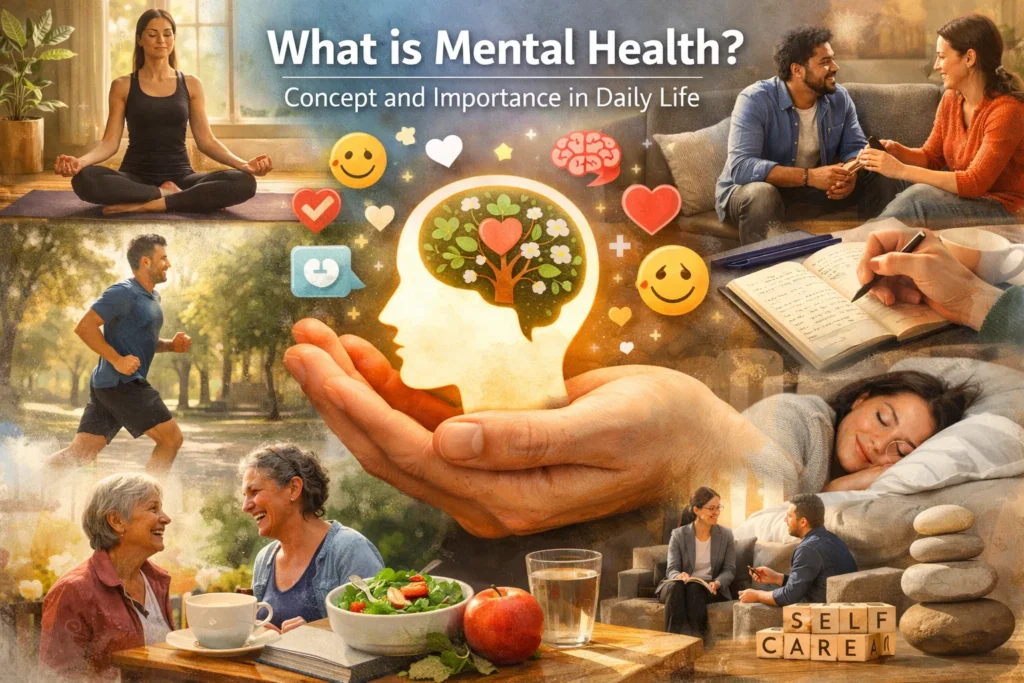
What is mental health? Concept and importance in daily life.
Much is said about the importance of mental health, but do you really know what this term means? Taking care of your mind is as essential as taking care of your body. After all, emotional balance directly impacts all areas of life — from relationships to professional performance.
In this article, we will explain what mental health is, why it is fundamental to well-being, and how maintaining a more emotionally balanced routine can, in fact, prevent disorders and improve your quality of life.
What does it mean to have good mental health?
Simply put, mental health is the state of emotional, psychological, and social balance that allows an individual to cope with daily challenges, develop healthy relationships, make conscious decisions, and enjoy life more fully.
Contrary to what many believe, having good mental health doesn’t mean being happy all the time. In fact, it’s about recognizing and managing emotions like sadness, anger, fear, or frustration without becoming completely unbalanced. Therefore, knowing how to embrace your emotions is a sign of emotional maturity.
Why is mental health so important?
The mind directly affects the body, behaviors, and how we relate to the world. When neglected, mental health can give way to chronic stress, anxiety, depression, irritability, and even physical symptoms such as insomnia, headaches, and gastrointestinal problems.
Here are some reasons why taking care of your mental health is essential:
- It improves quality of life : Emotionally balanced people tend to live with more ease, purpose, and well-being.
- It strengthens relationships : Those who take care of their mental health tend to communicate better, respect boundaries, and develop more empathy.
- It improves productivity : A healthy mind contributes to greater concentration, creativity, and efficiency at work or in studies.
- It helps prevent disorders : Self-care practices and psychological support prevent conditions such as anxiety and depression from worsening.
In short, taking care of your mental health is an investment with a guaranteed return in all areas of life.
Signs that something is wrong with your mental health.
In many cases, signs of emotional distress are ignored until they become more severe. Therefore, it is crucial to pay attention to warning signs, such as:
- Excessive tiredness, even after resting.
- Changes in sleep or appetite
- Constant irritability or frequent crying spells
- Difficulty concentrating
- Social isolation
- Persistent feelings of sadness, anguish, or emptiness.
If you identify with these symptoms, it’s important to understand that this is not a sign of weakness. On the contrary, it’s a signal that something needs attention. Therefore, seeking psychological support as soon as possible can make all the difference.
How can we take care of our mental health on a daily basis?
Taking care of your mental health is an ongoing process that involves simple, conscious actions. Below are some practices that can help:
- Establish a balanced routine.
Include moments for rest, leisure, healthy eating, and quality sleep. This way, you create a solid foundation for your emotional stability. - Practice physical activity regularly.
Physical exercise releases substances such as endorphins and serotonin, which help improve mood and reduce stress. - Maintain healthy connections.
Positive relationships are fundamental for emotional support. Therefore, try to be around people who make you feel good. - Express your feelings.
Suppressing emotions can lead to overwhelm. Therefore, talking about your feelings with someone you trust or writing in a journal can bring emotional relief. - Make time for yourself.
Having moments of solitude and self-care helps to recharge your energy and strengthen your self-esteem. - Seek professional help when needed.
Psychotherapy is a powerful tool for understanding emotions, overcoming difficulties, and strengthening your mental health. Therefore, don’t hesitate to seek out a psychologist.
Conclusion
Taking care of your mental health is an act of self-love and prevention. Small daily actions, combined with professional psychological support, can transform how you relate to the world—and to yourself.
Just as you take care of your body with medical check-ups, taking care of your mind with therapeutic support is also essential for living with more balance and well-being.
Want to take the first step towards taking care of your emotional health?
Also read: How to choose the ideal psychologist for you? 5 practical tips