
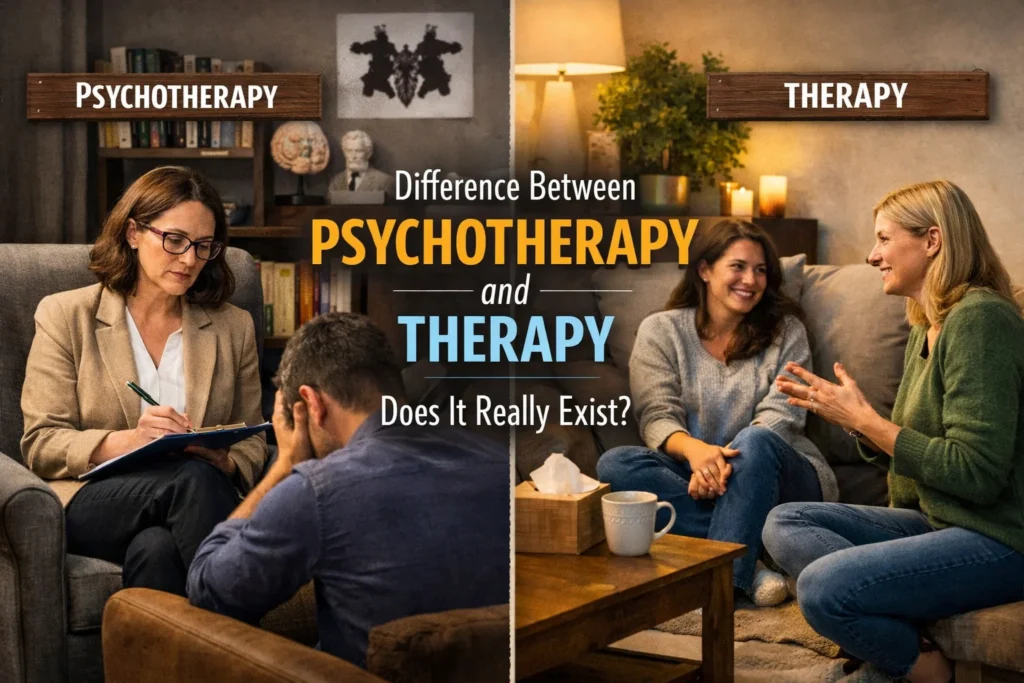
Difference between psychotherapy and therapy: does it really exist?
Many people use the terms “psychotherapy” and “therapy” interchangeably—and they’re not entirely wrong. However, despite the similarities, these concepts have particularities that are worth understanding, especially if you are seeking psychological help.
In this article, we will clarify the difference between psychotherapy and therapy, how each approach works, and why this knowledge can help you find the most appropriate emotional support.
What is psychotherapy?
Psychotherapy is a structured process conducted by a psychologist with specific training in mental health. It uses techniques based on psychological theories to help the person understand their emotions, behaviors, thoughts, and relationship patterns.
Furthermore, this process aims to promote self-awareness, emotional change, relief from psychological suffering, and improved quality of life. It can be individual, for couples, families, or in groups, depending on each person’s needs.
Main characteristics of psychotherapy:
- Led by a psychologist (or, in some cases, by a psychiatrist trained in psychotherapy)
- Based on scientific theories, such as psychoanalysis, CBT, humanism, among others.
- Regular and ongoing meetings
- A well-defined therapeutic focus and structured follow-up.
What is therapy?
On the other hand, the term therapy is broader and can refer to any type of treatment with a therapeutic objective, not necessarily psychological. It can include interventions performed by other health professionals, such as occupational therapists, physiotherapists, speech therapists, and even integrative practices such as aromatherapy or music therapy.
Furthermore, the term is often used informally to refer to any supportive conversation, even if it does not involve a clinical process.
Examples of common therapies:
- Occupational therapy
- Behavioral therapy (related to psychology)
- Family therapy
- Couples therapy
- Integrative therapies, such as Reiki or art therapy.
So, what’s the main difference?
Generally speaking, the main difference between psychotherapy and therapy lies in the professional’s training and the method used.
| Psychotherapy | Therapy |
|---|---|
| Conducted by a psychologist or psychiatrist. | It can be conducted by various professionals. |
| Based on theories of psychology | It may include non-psychological approaches. |
| It involves diagnosis and treatment plan. | It can have a more functional or complementary focus. |
| Focused on treating deep emotional issues. | It can address physical, sensory, or cognitive aspects. |
Therefore, understanding this distinction helps guide the search for the most appropriate care.
Why is this distinction important?
Understanding the difference between psychotherapy and therapy is essential for making more informed choices regarding mental health. For example, if you are experiencing anxiety, depression, trauma, or emotional difficulties, it is best to seek psychotherapy with a qualified professional.
Meanwhile, if your focus is on developing motor skills, improving social adaptation, or exploring artistic expression, other forms of therapy can complement your care process.
How do I know if I need psychotherapy?
You may benefit from psychotherapy if:
- Do you experience constant distress, deep sadness, or anxiety attacks?
- Do you have difficulty dealing with relationships or important decisions?
- Do you suffer from low self-esteem or a feeling of lack of purpose?
- Are you dealing with trauma, grief, or significant life changes?
- Do you want to get to know yourself better and develop emotional intelligence?
Even when there isn’t a “specific problem,” psychotherapy can be a valuable tool for self-development.
Conclusion
Although the terms “psychotherapy” and “therapy” are often used synonymously, understanding their differences is essential to seeking the most appropriate type of support. While psychotherapy is a structured clinical process conducted by psychologists based on scientific evidence, therapy can encompass different practices with diverse purposes.
Therefore, if you are facing emotional issues or wish to begin a process of self-discovery, psychotherapy is undoubtedly the most suitable path.
Want to learn more about the role of a psychologist in your well-being?
Also read: How to choose the ideal psychologist for you? 5 practical tips
