
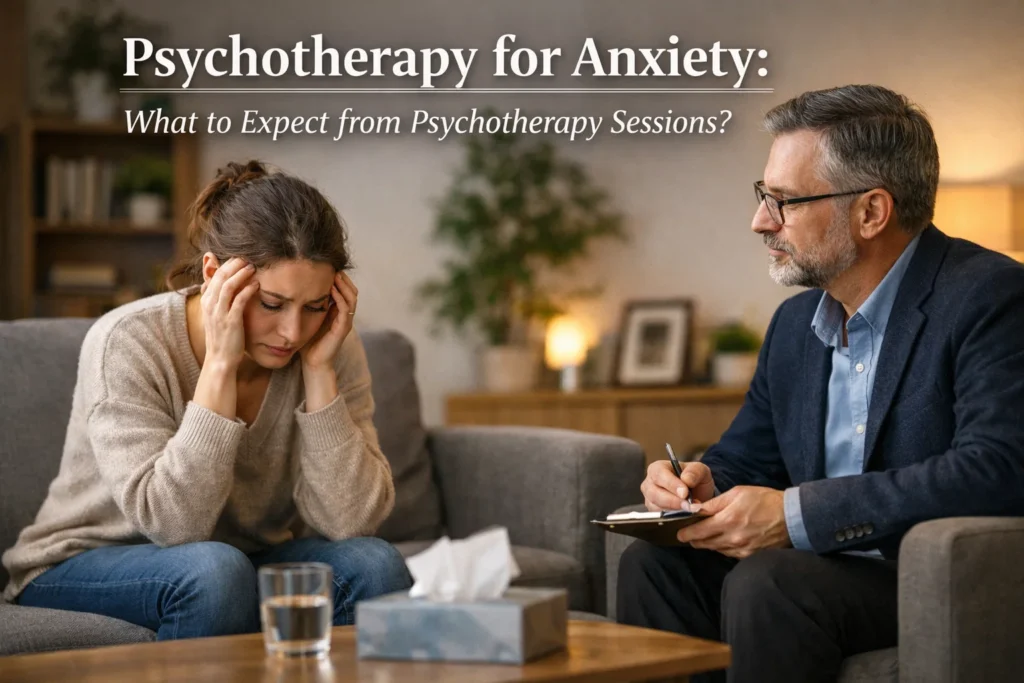
Psychotherapy for anxiety: What to expect from psychotherapy sessions? A beginner’s guide.
The decision to seek psychological help can be accompanied by many questions. After all, what happens in a psychotherapy session? How does anxiety treatment with a psychologist work? This guide is aimed at those who are starting or thinking about starting therapy and want to better understand how this process can contribute to a more balanced and healthy life.
What is psychotherapy?
Psychotherapy is a therapeutic process conducted by a psychologist, with the goal of helping a person deal with emotional, behavioral, or cognitive issues. Specifically in the case of anxiety, therapy seeks to identify triggers, develop coping strategies, and promote self-awareness.
There are different psychotherapeutic approaches, such as cognitive-behavioral therapy (CBT), psychoanalysis, gestalt therapy, among others. Each has its own particularities. However, they all share essential elements, such as acceptance and qualified listening.
What to expect from the first session with a psychologist?
The first session is usually more introductory. In it, the psychologist will:
- Listen to their story;
- Understanding their complaints and symptoms;
- Explain how the therapeutic process works;
- To clarify any doubts regarding the frequency, confidentiality, and goals of therapy.
Therefore, this initial conversation is important to establish a bond of trust and acceptance. It’s worth remembering that there’s no right or wrong—you can say whatever you feel comfortable with. Often, just being heard brings relief.
Example:
If you have anxiety attacks, the psychologist may ask when they started, how you feel during the attacks, and in what situations they occur most frequently.
What are the following sessions like?
Starting with the second session, the psychologist can begin to delve deeper into the issues raised previously. Over time, you will:
- Understanding thought and behavior patterns that fuel anxiety;
- Learn techniques to deal with stress and automatic thoughts;
- Explore past and present experiences that impact your emotional health;
- Work on coping skills, such as breathing, relaxation, or cognitive restructuring.
Furthermore, the psychologist may suggest tasks between sessions, precisely to reinforce the lessons learned in practical life. In this way, the therapeutic process extends beyond the consulting room, promoting more consistent changes.
Is psychotherapy just about talking?
Although listening is a central part of therapy, the process goes far beyond conversation. The psychologist uses techniques based on scientific evidence to promote meaningful change. Depending on the approach used, you may work with breathing exercises, thought journaling, drawing, metaphors, or behavioral experiments.
Example:
In an approach like CBT, the psychologist might suggest that you record situations that caused anxiety during the week and identify the thoughts associated with them. This helps to increase awareness and change how you deal with these moments.
How long does psychotherapy for anxiety last?
There is no single answer. The duration varies depending on the severity of the symptoms, the approach used, and the patient’s engagement. While some people see improvements in just a few sessions, others continue for months or years, depending on their goals.
In any case, it’s important to understand that progress can be gradual. Anxiety is a treatable condition, but it requires patience and commitment. Therefore, maintaining an active and open attitude towards the process makes all the difference.
Does online therapy work?
Yes, online therapy is an effective and safe alternative for treating anxiety. In fact, many studies have already proven that the results of online psychotherapy are as positive as those of in-person therapy. Furthermore, it offers convenience and flexible scheduling.
However, to ensure good results, it is essential that the psychologist be registered with the CRP (Regional Council of Psychology) and use secure platforms.
Benefits of starting psychotherapy for anxiety
When you begin psychotherapy, you may experience several benefits, such as:
- Reduction of anxiety symptoms;
- Improved quality of life and sleep;
- Developing self-esteem and self-confidence;
- Improved interpersonal relationships;
- Greater emotional clarity and decision-making.
Conclusion
Starting psychotherapy may seem challenging at first, but over time it proves to be a courageous step towards your well-being. The sessions are safe, welcoming, and structured spaces where you can better understand yourself, develop emotional skills, and cope with anxiety in a healthier way.
Remember: seeking help is not a sign of weakness — it’s an act of self-care. Therefore, if you are considering starting therapy, know that this could be the beginning of a great transformation.
Want to learn more about how therapy can help you with anxiety? Read also:
👉 Psychotherapy for anxiety: how can a psychologist help?
