
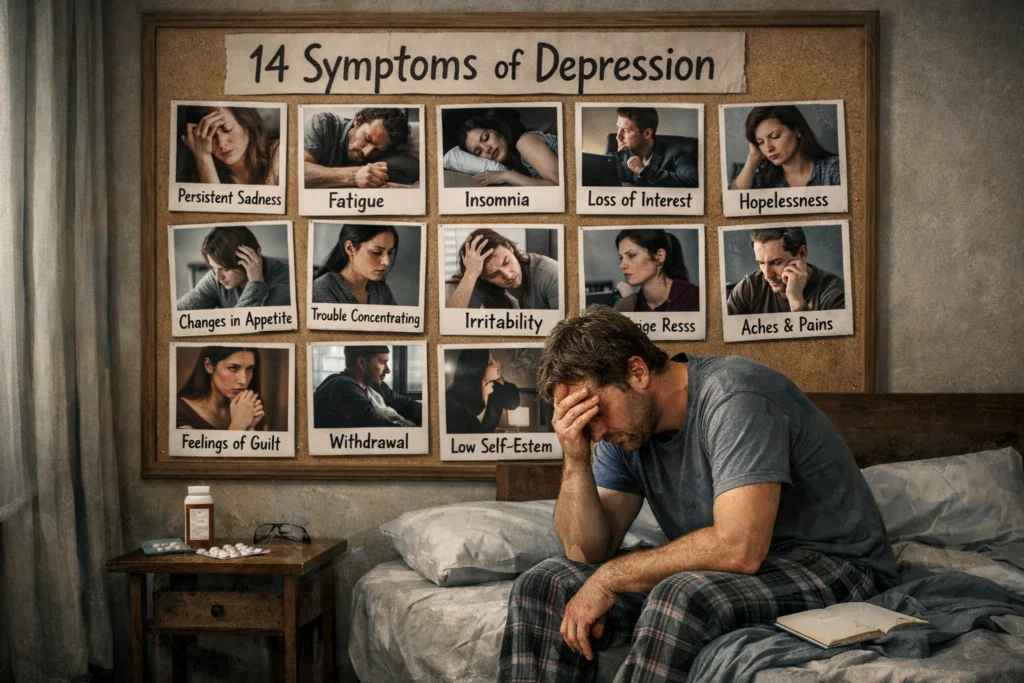
14 Warning Signs of Depression: A Complete Guide to Recognition and Response
Depression doesn’t announce itself with a single, obvious symptom. It arrives gradually, often disguised as tiredness, stress, or simply “having a bad week.” By the time people recognize they’re experiencing depression rather than temporary low mood, they’ve often been suffering for months or longer, enduring symptoms they didn’t realize were treatable.
Understanding the signs of depression matters because early recognition leads to earlier intervention, better outcomes, and less suffering. Whether you’re concerned about yourself or someone you care about, this comprehensive guide will help you recognize depression’s warning signs, understand when professional help is needed, and take the first steps toward recovery.
Understanding Depression: More Than Sadness
Depression is a serious mental health condition that affects how you feel, think, and function in daily life. It’s fundamentally different from the temporary sadness, disappointment, or grief that everyone experiences in response to life’s challenges.
Normal sadness is proportional to its cause, improves with time or positive experiences, and doesn’t significantly impair your ability to function. Depression, conversely, is persistent and pervasive, resistant to circumstances that would normally improve mood, and creates significant impairment in work, relationships, or self-care.
Depression involves changes in brain chemistry and function, affecting neurotransmitters like serotonin, norepinephrine, and dopamine. This biological component explains why you can’t simply “snap out of it” or “think positively”—depression isn’t a choice or character flaw. It’s a medical condition that responds to appropriate treatment.
The condition exists on a spectrum from mild to severe. Mild depression might allow you to maintain basic functioning while feeling consistently low and struggling more than usual. Moderate depression significantly impacts your ability to work, maintain relationships, and find enjoyment. Severe depression can be debilitating, making even basic self-care feel impossible and, in extreme cases, creating risk of self-harm.
Why Early Recognition Changes Everything
The earlier depression is recognized and treated, the better the outcome. Early intervention prevents symptoms from worsening and becoming more entrenched, reduces the risk of relapse in the future, minimizes impact on work, relationships, and overall life, and shortens the duration of suffering.
Depression has a progressive quality—untreated, it often worsens over time. What begins as low mood and reduced interest can evolve into profound hopelessness, severe functional impairment, and in the most serious cases, suicidal thinking. Early treatment interrupts this progression.
For people who care about someone with depression, recognizing signs allows you to offer support, encourage professional help, and avoid misunderstanding withdrawal or irritability as personal rejection. Depression doesn’t just affect the person experiencing it—it impacts everyone who cares about them.
The 14 Warning Signs: A Detailed Look
Depression manifests differently in different people, but certain symptoms appear consistently. The presence of several of these symptoms, persisting for at least two weeks and representing a change from your normal functioning, suggests clinical depression warranting professional evaluation.
1. Persistent Depressed Mood
This goes beyond occasional sadness. It’s a pervasive low mood that colors everything—a heaviness, emptiness, or numbness that persists regardless of circumstances. Some people describe it as feeling gray, flat, or hollowed out rather than specifically sad.
This mood persists throughout most of the day, nearly every day. Temporary improvements might occur in response to positive events, but the baseline mood remains low. For some people, particularly men and adolescents, this manifests more as irritability or anger than sadness.
The key distinguishing feature is persistence. Everyone has bad days or even difficult weeks. Depression involves weeks or months of this altered mood state without significant relief.
2. Loss of Interest or Pleasure (Anhedonia)
One of depression’s hallmark symptoms is anhedonia—the inability to experience pleasure in activities that previously brought joy. Hobbies feel pointless, time with friends feels effortful rather than enjoyable, and things that used to matter simply don’t anymore.
This isn’t just reduced interest—it’s a profound flatness where nothing feels rewarding or worthwhile. You might continue doing activities out of obligation but experience no satisfaction from them. Food loses its appeal, music feels empty, achievements bring no pride.
Anhedonia is particularly insidious because it removes the natural rewards that normally motivate behavior, contributing to withdrawal and inactivity that further deepen depression.
3. Significant Changes in Appetite and Weight
Depression commonly disrupts appetite regulation, though the direction varies. Some people experience decreased appetite, finding food unappetizing and eating only when necessary, often resulting in weight loss. Others experience increased appetite, particularly for carbohydrates and comfort foods, sometimes using eating to cope with emotional pain, leading to weight gain.
The key is significant change from your normal pattern—weight loss or gain of more than 5% of body weight in a month, eating substantially more or less than usual without conscious dieting, or using food primarily for emotional comfort rather than hunger.
These changes reflect both biological alterations in appetite regulation and behavioral responses to emotional distress.
4. Sleep Disturbances
Sleep problems are nearly universal in depression, though they take different forms. Insomnia might involve difficulty falling asleep despite exhaustion, waking frequently throughout the night, or early morning awakening (waking at 3 or 4 AM unable to return to sleep).
Conversely, some people experience hypersomnia—sleeping excessively yet never feeling rested, finding it difficult to get out of bed, or using sleep as escape from emotional pain. You might sleep 10, 12, or more hours and still feel exhausted.
Either pattern—too little sleep or too much—disrupts normal functioning and often worsens other depression symptoms. Poor sleep affects mood, concentration, energy, and decision-making, creating a vicious cycle.
5. Psychomotor Changes
Depression affects not just mood but also physical movement and speech. Psychomotor retardation involves slowed movement and speech, taking longer to respond in conversation, feeling physically heavy or as if moving through water, and difficulty initiating actions—sitting for long periods without moving.
Conversely, psychomotor agitation manifests as restlessness and inability to sit still, fidgeting, pacing, or hand-wringing, and feeling physically wound up despite mental exhaustion.
These changes are observable to others—family members notice you’re moving or speaking more slowly, or conversely, that you seem unable to settle. This physical manifestation of depression reflects its neurobiological nature.
6. Profound Fatigue and Loss of Energy
Depression-related fatigue is qualitatively different from normal tiredness. It’s a bone-deep exhaustion that rest doesn’t relieve, feeling drained even after adequate sleep, finding basic tasks like showering or preparing meals exhausting, and lacking energy for activities that require minimal physical exertion.
This fatigue isn’t proportional to activity level—you might feel exhausted after doing very little. It reflects both the neurobiological aspects of depression and the mental energy consumed by constant negative thoughts and emotional pain.
People often describe feeling as if they’re operating with weights attached or moving through thick fog. Everything requires more effort than it should.
7. Feelings of Worthlessness or Excessive Guilt
Depression profoundly distorts self-perception. You might believe you’re fundamentally flawed, defective, or unworthy, experience intense guilt over minor mistakes or past events, interpret neutral situations as evidence of your inadequacy, or feel you’re a burden to others and they’d be better off without you.
This isn’t accurate self-reflection—it’s a symptom. Depression acts like a filter that lets through only information confirming negative self-beliefs while filtering out anything positive. Achievements are minimized, failures are catastrophized, and any self-compassion feels undeserved.
These thoughts can become self-reinforcing: believing you’re worthless leads to withdrawal and reduced effort, which creates more “evidence” for worthlessness. Challenging these distorted beliefs is often a central component of therapy.
8. Diminished Ability to Think or Concentrate
Depression significantly impairs cognitive function. This might manifest as difficulty focusing on tasks that previously required little effort, trouble making decisions, even simple ones, problems with memory, particularly for recent events, slowed thinking or feeling mentally foggy, and inability to follow complex conversations or written material.
These cognitive symptoms often cause significant work or academic impairment. Projects that once took hours now take days. You reread the same paragraph repeatedly without comprehension. Decisions feel overwhelming.
This isn’t laziness or lack of intelligence—depression literally affects brain regions involved in attention, memory, and executive function. These symptoms typically improve with treatment.
9. Recurrent Thoughts of Death or Suicide
While not everyone with depression experiences suicidal thinking, it’s common enough to be a diagnostic criterion. This might begin as passive death wishes—thoughts like “I wish I wouldn’t wake up” or “Everyone would be better off without me”—and potentially progress to more active suicidal ideation involving specific plans or intentions.
Any suicidal thinking requires immediate attention. If you’re experiencing thoughts of harming yourself, reach out to a crisis helpline, mental health professional, or emergency services immediately. If someone you care about expresses suicidal thoughts, take them seriously and help them access professional help.
Suicidal thinking reflects depression’s profound hopelessness and pain, not accurate assessment of your situation or worth. With treatment, these thoughts diminish, and people almost universally report being grateful they survived their suicidal crisis.
10. Social Withdrawal and Isolation
Depression often creates a powerful urge to withdraw from social connection—canceling plans with friends, avoiding social events, ignoring calls and messages, preferring isolation even when lonely, and difficulty maintaining relationships.
This withdrawal serves multiple functions: social interaction feels exhausting when depressed, you might believe others wouldn’t want to be around you in your current state, or you may feel unable to pretend you’re okay. Unfortunately, isolation typically worsens depression by removing sources of support, positive experiences, and external structure.
Recognizing this pattern helps you understand that the urge to isolate is a symptom to resist rather than wisdom to follow.
11. Increased Irritability and Low Frustration Tolerance
Depression doesn’t always look like sadness. Many people, particularly men and adolescents, experience depression primarily as irritability—short temper and overreacting to minor frustrations, anger that feels disproportionate to situations, impatience with others, and feeling constantly annoyed or on edge.
This irritability often puzzles both the person experiencing it and those around them. It can damage relationships when others don’t recognize it as a depression symptom and instead interpret it as personality change or intentional hostility.
Understanding irritability as a depression symptom helps prevent it from being misinterpreted and encourages appropriate treatment rather than simply trying to “control your temper.”
12. Unexplained Physical Symptoms
Depression commonly manifests through physical symptoms without clear medical cause—persistent headaches, back pain, or muscle aches, digestive problems like nausea or stomach pain, chest tightness or heart palpitations unrelated to heart disease, and general physical discomfort that doctors can’t explain.
These aren’t imagined—depression involves real physiological changes affecting pain perception, inflammation, and stress hormone levels. The mind-body connection means psychological distress manifests physically.
Many people initially seek medical help for these physical symptoms without recognizing their connection to mood. When medical evaluation rules out physical causes, considering depression as the underlying issue becomes important.
13. Difficulty Experiencing or Expressing Emotions
Some people with depression experience emotional numbness—feeling disconnected or detached from emotions, inability to cry even when wanting to, feeling “empty” or “nothing” rather than specifically sad, or going through motions without emotional connection to experiences.
This numbness can be particularly distressing because it prevents both negative and positive emotional experiences. You might desperately want to feel something—even sadness—instead of the void depression creates.
Alternatively, some people experience heightened emotional reactivity—crying frequently and easily, emotions feeling overwhelming and uncontrollable, or shifting rapidly between emotional states.
14. Impaired Work, Academic, or Daily Functioning
Depression’s various symptoms combine to impair overall functioning—declining performance at work or school, difficulty completing tasks that were previously routine, neglecting household responsibilities or personal hygiene, missing work or class frequently, and withdrawing from previously maintained activities and commitments.
This functional impairment distinguishes clinical depression from normal mood fluctuation. Everyone has off days or difficult periods, but depression creates sustained impairment across multiple life domains.
.
