
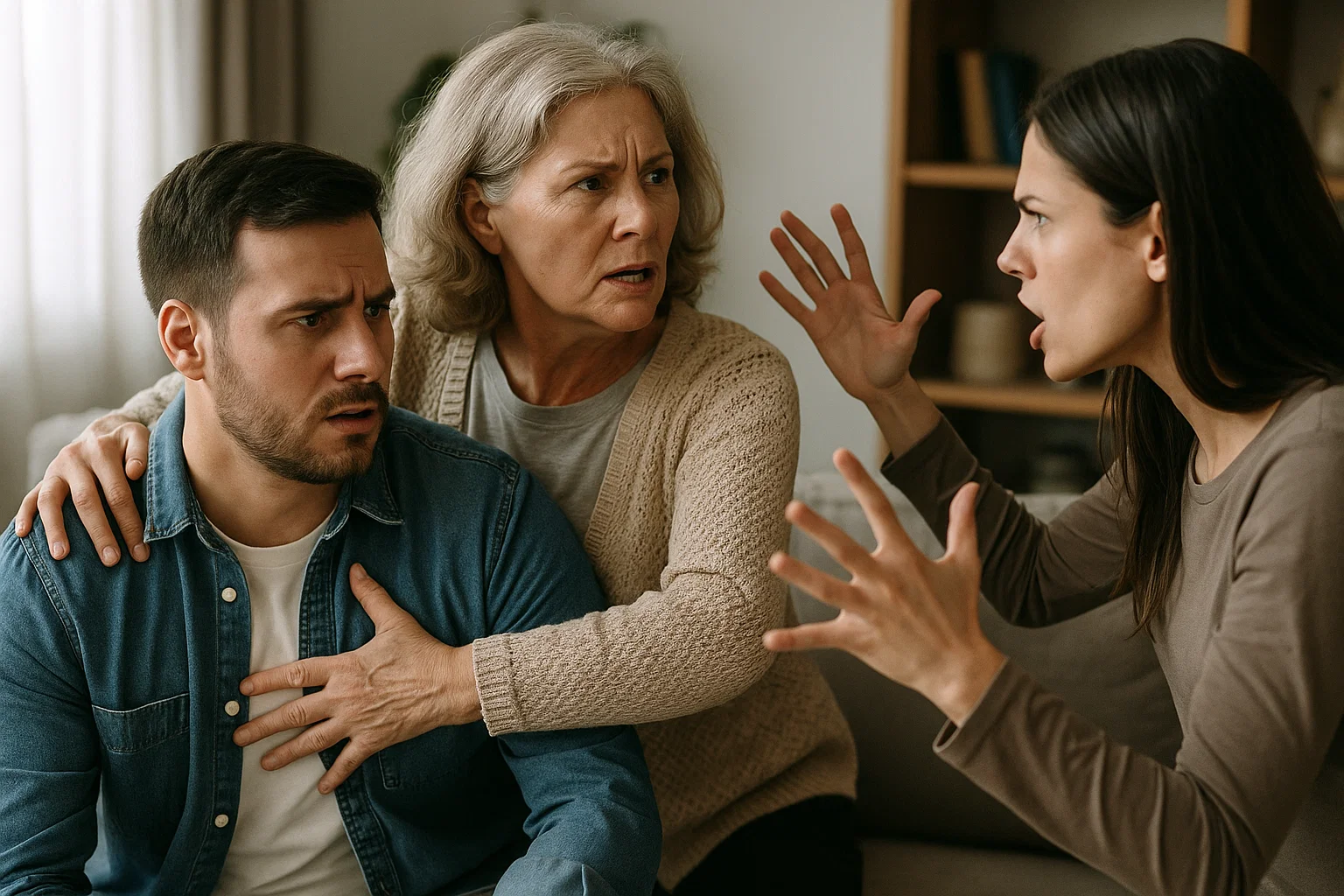
🧠 Mama’s Boy: When the Relationship with the Mother Harms the Marriage
The relationship between mother and child is one of the strongest connections a human being can experience. From birth, the mother represents care, protection, and affection. This bond is essential for emotional development during childhood, but it needs to transform throughout life. When this evolution does not occur, emotional dependence can arise, compromising other important areas of adult life—especially marriage.
The popular term “mama’s boy” is often used pejoratively, but behind it lies a complex emotional reality. It refers to adults (usually men) who maintain an excessive attachment to their mothers, even after starting married life. This emotional dependence can interfere with autonomy, decision-making, and the balance of romantic relationships.
In this article, we will understand the impacts of this dynamic, the warning signs, and how psychotherapy can be an effective way to build more mature, healthy, and respectful relationships.
❗ When a Bond Turns into Dependency
It’s important to recognize that maintaining a good relationship with one’s mother is not, in itself, a problem. On the contrary, healthy family bonds are sources of emotional support. The problem arises when this bond fails to adapt to new phases of life. Instead of transforming, it remains fixed in childish patterns, hindering the development of emotional autonomy.
In such cases, the adult continues to turn to the mother for everything: advice, approval, emotional validation. She comes to occupy a central space in the child’s life, often above the spouse. The partner feels excluded, devalued, and even replaced, which inevitably generates frustration, conflict, and resentment.
Clinical example:
Lucas, 34, married for two years, sought therapy after noticing his wife was becoming increasingly distant. During the sessions, he revealed that he wouldn’t make any important decisions without consulting his mother first—from financial expenses to travel and household matters. His wife felt ignored, as if her opinions had no value. Throughout the therapeutic process, Lucas recognized that his difficulty in asserting himself stemmed from an unconscious fear of disappointing his mother, something rooted in childhood.

💔 Direct Impacts on Romantic Relationships
The “mama’s boy” dynamic can have profound effects on marital relationships. When the bond with the mother remains paramount, the couple has difficulty building a partnership based on trust, reciprocity, and independence.
Main consequences:
Lack of autonomy: The spouse feels married to “two” people — the partner and the mother-in-law. Every decision requires the approval of others, undermining the intimacy of the relationship.
Frequent conflicts: The mother’s constant interference generates disputes, misunderstandings, and repetitive arguments, usually centered on divided loyalties.
Difficulty in setting boundaries: Many men raised with the expectation of pleasing their mothers avoid contradicting them, even when it harms their relationship.
Emotional immaturity: Continuous dependence hinders the development of self-confidence and the ability to cope with frustration, which is fundamental in marital life.
In more serious cases, the mother may adopt a controlling or possessive stance, further fueling the unhealthy bond. She directly interferes in the couple’s decisions, criticizes her partner, and positions herself as the most important figure in her child’s life. This type of behavior can silently but profoundly erode the relationship.
⚠️ Warning Signs: When Mom Is Always Present
Some behaviors indicate that the mother-child relationship has crossed healthy boundaries. Paying attention to these signs is crucial to preventing further damage to the marriage.
She calls her mother several times a day, even during intimate or important moments for the couple;
Avoid making any decisions without consulting her first;
He demonstrates more loyalty to his mother than to his spouse;
You feel guilt, fear, or excessive anxiety when you contradict her;
He makes comparisons between his mother and his partner;
It allows the mother to interfere in intimate matters of the relationship.
These signs should not be ignored. When neglected, they can intensify and become a constant source of pain, resentment, and estrangement between the couple.
🧘 Psychology as a Tool for Transformation
Psychotherapy is a powerful tool for treating issues of emotional dependency. Through self-knowledge, it’s possible to understand where these patterns come from and, most importantly, learn to reframe them.

Benefits of individual psychotherapy:
Identify the origin of emotional dependency (often linked to childhood);
Recognizing the fear of disappointing parents and how this is reflected in current relationships;
To develop emotional autonomy and self-confidence;
Learning to establish healthy boundaries with parents;
To improve the ability to communicate assertively with your partner.
When should you seek couples therapy?
If the behavior is already directly affecting the marital bond, couples therapy can be an effective alternative. The therapeutic space fosters dialogue, empathetic listening, and the building of agreements. The goal is not to point fingers, but rather to promote an environment where both can express their pain, needs, and expectations.
Clinical example:
Juliana and Rafael, together for five years, sought therapy because the constant presence of the mother-in-law was affecting the harmony of their home. Rafael, very close to his mother, didn’t realize how much his behavior made Juliana feel invisible. During the sessions, he was able to reflect on his behavior and learned to set boundaries respectfully. By prioritizing their marital relationship, the couple strengthened their bond and managed to rekindle their partnership.
🌱 Growing up is about redefining roles, not breaking ties.
Seeking emotional independence doesn’t mean breaking ties with your parents or distancing yourself permanently. True maturity lies in knowing how to redefine roles, so that the relationship with your parents continues to exist—but without compromising your individuality and the commitments of adult life.

Marriage requires autonomy, mutual trust, and partnership. When these foundations are compromised by external interference, especially from the family of origin, strain becomes inevitable.
It’s important to understand that symbolically leaving one’s family of origin—that is, becoming emotionally independent—is a natural and healthy process. It allows adults to forge their own path, take on responsibilities, and build more balanced relationships.
💬 Are you experiencing this situation?
If you identified with this text, or know someone who is going through something similar, know that you are not alone. Psychotherapy can be a transformative step. It offers support, acceptance, and practical tools to change patterns, heal emotional wounds, and strengthen affective bonds.
It’s not about pointing fingers, but about understanding that we all carry learned patterns—and that it’s possible to rewrite them.
