
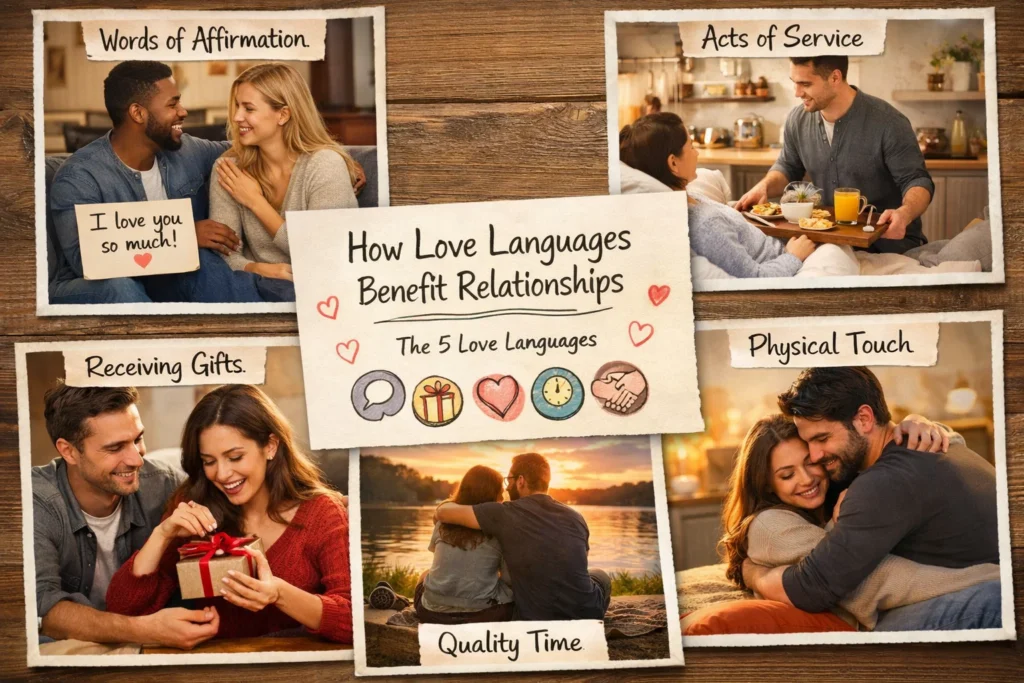
How Love Languages Benefit Relationships
Understanding how we give and receive love can transform our relationships. The five love languages framework offers a practical way to decode what makes us and our partners feel truly valued and appreciated.
What Are the Five Love Languages?
The five love languages describe different ways people experience and express love in relationships. Developed by author and pastor Gary Chapman, these languages emerged from patterns he observed while counseling couples. His 1992 book, The 5 Love Languages, identified five primary ways people communicate affection:
Words of Affirmation involve expressing affection through spoken appreciation, compliments, and encouragement. People with this love language cherish hearing phrases like “I love how you do that” or receiving affectionate messages. Kind words and verbal recognition brighten their day and make them feel deeply valued.
Quality Time centers on giving your partner undivided attention. This means being fully present—putting away your phone, maintaining eye contact, listening actively, and engaging in meaningful moments together. For those who value quality time, the depth of connection matters far more than the duration.
Physical Touch encompasses all forms of physical contact, from holding hands and hugging to kisses and gentle touches on the arm. People with this love language feel most connected through physical closeness, whether it’s a long embrace or simply holding hands while watching a movie together.
Acts of Service means demonstrating love through helpful actions. This includes helping with dishes, doing household chores, refueling the car, or preparing a meal. When your partner values acts of service, they notice and deeply appreciate every thoughtful gesture of care you provide.
Receiving Gifts involves giving and receiving tangible symbols of affection and attention. The monetary value matters less than the thought and meaning behind the gift. A small, carefully chosen present often resonates more deeply than an expensive but impersonal one.
Discovering Your Love Language
Understanding your own love language starts with self-reflection. Consider these questions:
- Do you feel most loved when you hear kind words and compliments?
- Does receiving a meaningful gift make you feel especially appreciated?
- Do you value spending quality, uninterrupted time with your partner?
- Do you feel loved when your partner helps with tasks and responsibilities?
- Do physical touch, hugs, and kisses make you feel most connected?
Your answers reveal which language speaks to you most strongly. Pay attention to how you naturally express love to others as well—this often reflects your own primary love language.
The Benefits of Understanding Love Languages
When couples learn and practice each other’s love languages, their relationships can flourish in several meaningful ways.
Understanding your partner’s love language promotes altruism by shifting your focus from your own preferences to what genuinely makes them feel loved. This builds deeper empathy and emotional connection as you learn to see affection through their eyes.
Discussing what keeps each other’s “love tank” full maintains and deepens intimacy. These conversations create opportunities for vulnerability and understanding that strengthen your bond.
Practicing your partner’s love language encourages personal growth by challenging you to step outside your comfort zone. When your natural way of showing love differs from what your partner needs, adapting helps you develop new emotional skills.
Small, consistent gestures aligned with your partner’s love language make the relationship more meaningful and resilient. These daily acts of intentional affection create a foundation of feeling valued and understood.
Limitations to Consider
While the love languages framework has helped countless couples, it has some limitations worth noting.
The theory shouldn’t become a transactional scorecard. Some people turn it into a competition or demand excessive reciprocity, which misses the point of selfless love.
Knowing your partner’s love language doesn’t replace fundamental relationship skills like communication, conflict resolution, and emotional maturity. It’s a tool, not a complete solution to relationship challenges.
Expecting your partner to always express love in a specific way can create pressure and frustration. Flexibility and grace matter—people show love in imperfect ways, especially during stressful times.
Chapman’s original book focused on heterosexual couples, though the principles apply to all relationships regardless of sexual orientation or relationship structure.
Some relationship experts note that love languages may oversimplify the complex ways humans experience connection. Shared experiences, emotional security, and other forms of intimacy matter too.
Making Love Languages Work for You
The love languages framework works best when both partners approach it with openness and patience. Love isn’t automatic—it requires daily cultivation and intentional effort.
Start by identifying your own love language and sharing it with your partner. Ask them to do the same. Discuss specific, practical ways you can each make the other feel loved and valued.
Remember that people often have more than one love language, with varying degrees of importance. Stay curious about what resonates with your partner and be willing to adjust as you both grow and change.
When you and your partner commit to learning and demonstrating love in ways that genuinely resonate with each other, your relationship becomes deeper, more meaningful, and more fulfilling. The effort you invest in understanding and speaking each other’s love language creates a stronger foundation for lasting connection.
