
Understanding Dyslexia: A Comprehensive Guide
Dyslexia is a specific learning disorder that affects an individual’s ability to read, write, and spell, despite normal intelligence and adequate access to education. This neurobiological condition challenges millions of people worldwide, requiring specialized strategies for learning and development. Importantly, dyslexia is not related to lack of effort, motivation, or educational opportunity—it stems from differences in how the brain processes language.
What Is Dyslexia?
Dyslexia is characterized by persistent difficulties with decoding words, reading fluency, and text comprehension. These challenges typically result from deficits in phonological processing—the ability to identify and manipulate the sounds of language. When individuals with dyslexia encounter written text, their brains process the relationship between letters and sounds differently than typical readers.
While people with dyslexia may perform slowly or inaccurately on reading-related tasks, they often demonstrate exceptional creativity, intelligence, and skills in areas not primarily dependent on language processing. Many excel in art, music, spatial reasoning, problem-solving, and innovative thinking. These strengths represent genuine cognitive abilities, not merely compensatory mechanisms.
Causes and Risk Factors
Dyslexia has both genetic and neurological origins. The condition runs in families, with individuals who have a parent or sibling with dyslexia facing significantly higher risk of developing the disorder themselves.
Neuroimaging studies reveal structural and functional differences in brain areas responsible for language processing, primarily in the left hemisphere. These differences affect how the brain recognizes and processes written symbols, particularly in regions involved in phonological processing, rapid naming, and orthographic processing.
While environmental factors such as limited early literacy exposure can exacerbate the challenges faced by people with dyslexia, they are not the primary cause of the disorder. The neurological differences that underlie dyslexia exist from birth, though they may not become apparent until formal reading instruction begins.
Recognizing Signs and Symptoms
The symptoms of dyslexia vary depending on age and severity. Early recognition allows for more effective intervention.
Preschool Years
Young children who later receive dyslexia diagnoses often show delayed speech development and difficulty learning rhymes. They may struggle to recognize letters or remember letter names, and often have trouble learning the alphabet sequence. Word retrieval difficulties—when a child knows what they want to say but can’t find the right word—are also common.
School Age
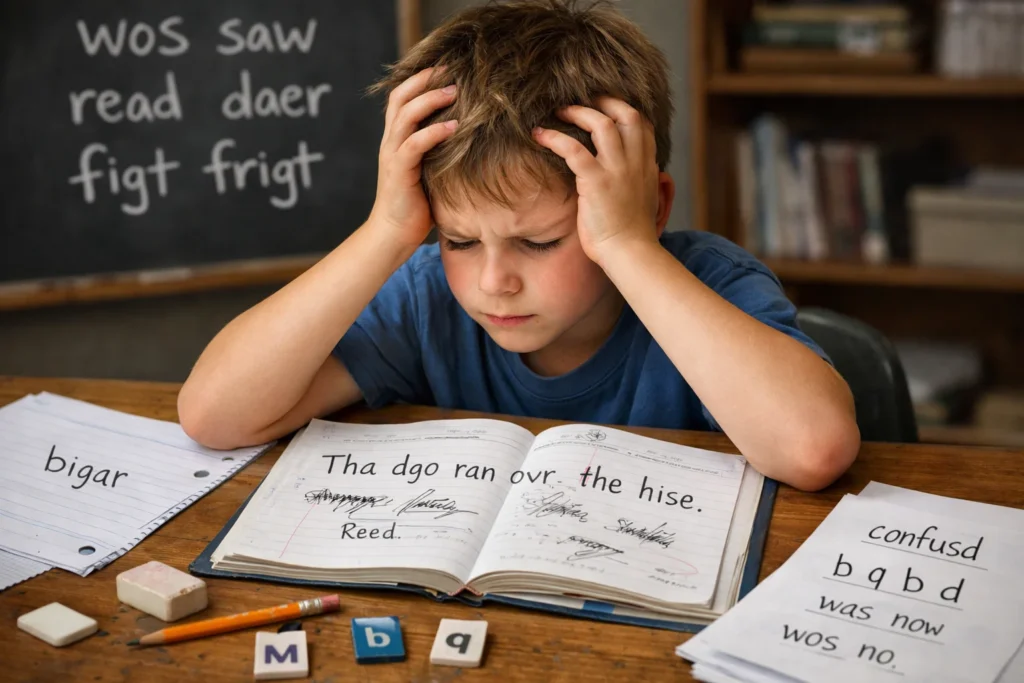
During elementary school, dyslexia becomes more apparent as reading demands increase. Children struggle to read isolated words and frequently confuse similar-sounding phonemes. Their reading speed remains slow even with practice, and they often have significant difficulty learning spelling patterns. Reading aloud may be particularly challenging, and they might avoid reading tasks whenever possible.
Adolescence and Adulthood
Older individuals with dyslexia continue to face challenges with reading and writing efficiency. They may have difficulty expressing ideas clearly in writing, struggle with learning foreign languages, and require significantly more time to complete reading-based tasks. Many develop coping strategies that partially mask their difficulties, but the underlying processing challenges persist. Low self-esteem related to academic performance often accompanies these ongoing struggles.
Emotional and Social Impact
Beyond academic difficulties, dyslexia profoundly affects self-esteem and emotional well-being. Children and adolescents with dyslexia often feel different from their peers, which can impact social interactions and overall mental health. Repeated experiences of frustration and failure in reading-related tasks can lead to anxiety, avoidance behaviors, and feelings of inadequacy.
Many individuals with dyslexia internalize the belief that they are less intelligent than their peers, despite evidence to the contrary. This misconception can limit their aspirations and self-confidence across all areas of life, not just academics.
Creating a supportive environment that recognizes and celebrates the unique skills and talents of individuals with dyslexia is essential. When parents, educators, and healthcare professionals focus on strengths while providing appropriate support for challenges, individuals with dyslexia develop more positive self-concepts and greater resilience.
Diagnosis Process
Dyslexia is diagnosed through comprehensive evaluation by a multidisciplinary team that may include psychologists, speech-language pathologists, and neuropsychologists. The diagnostic process involves assessing reading accuracy, reading fluency, reading comprehension, writing skills, language abilities, and memory function.
Evaluators also rule out other conditions that may cause similar difficulties, such as hearing impairments, vision problems, intellectual disabilities, or inadequate educational opportunities. A thorough diagnosis considers the individual’s developmental history, family history, and response to previous interventions.
Accurate diagnosis provides a foundation for developing targeted intervention strategies and helps individuals and families understand that reading difficulties stem from neurological differences rather than personal failings.
Effective Interventions and Support
While dyslexia cannot be cured, evidence-based interventions significantly improve reading skills and overall functioning. Success requires early identification, appropriate instruction, and ongoing support.
Early Intervention
The earlier dyslexia is identified and addressed, the more effective treatment becomes. Early intervention during the critical periods of reading development can prevent the accumulation of reading deficits and the secondary emotional consequences that often accompany prolonged academic struggle.
Structured Literacy Programs
Systematic, explicit instruction in phonics proves especially effective for individuals with dyslexia. These structured literacy approaches emphasize the relationship between sounds and letters, teaching phonological awareness, decoding skills, and spelling patterns in a sequential, multisensory manner. Programs like Orton-Gillingham and Wilson Reading System have demonstrated strong outcomes.
Assistive Technology
Modern technology offers powerful tools that support individuals with dyslexia. Text-to-speech software allows access to written content without relying solely on decoding skills. Audiobooks provide alternative pathways to literature and information. Speech-to-text programs enable writing without the mechanical challenges of spelling and transcription. These technologies don’t replace reading instruction but provide scaffolding that supports independence and learning.
Psychosocial Support
Addressing the emotional impact of dyslexia is as important as addressing the academic challenges. Therapeutic interventions that build self-esteem, develop coping strategies, and enhance social skills help minimize the psychological toll of living with dyslexia. Support groups connecting individuals with dyslexia can reduce feelings of isolation and provide practical strategies from those with shared experiences.
School and Family Collaboration
Effective support for dyslexia requires partnership between educators and families. When schools provide appropriate accommodations—such as extended time on tests, alternative formats for assignments, and access to assistive technology—students can demonstrate their knowledge without being penalized for their reading difficulties. Parents who understand dyslexia can advocate effectively for their children while providing encouragement and support at home.
The Psychologist’s Role
Psychologists play a crucial role in supporting individuals with dyslexia throughout their lives. They help identify emotional factors that may interfere with learning, such as anxiety or depression stemming from academic struggles. Through therapeutic work, psychologists address self-esteem issues and help individuals develop behavioral strategies that support academic success.
Psychologists also provide valuable guidance to parents and teachers, promoting deeper understanding of dyslexia and encouraging inclusive teaching practices. They can help families navigate the diagnostic process, understand evaluation results, and develop realistic yet optimistic expectations for their child’s development.
Looking Forward with Hope
Dyslexia presents genuine challenges, but it does not define an individual’s potential or predict their future success. With early diagnosis, evidence-based interventions, and supportive environments, people with dyslexia develop their abilities fully and achieve success across diverse fields.
Many accomplished individuals—including entrepreneurs, artists, scientists, and leaders—have dyslexia. Their success demonstrates that the neurological differences underlying dyslexia often accompany strengths in creativity, problem-solving, and innovative thinking.
Recognizing the difficulties while valuing each person’s unique qualities transforms challenges into opportunities. When we provide appropriate support and celebrate diverse ways of thinking and learning, individuals with dyslexia thrive.
