
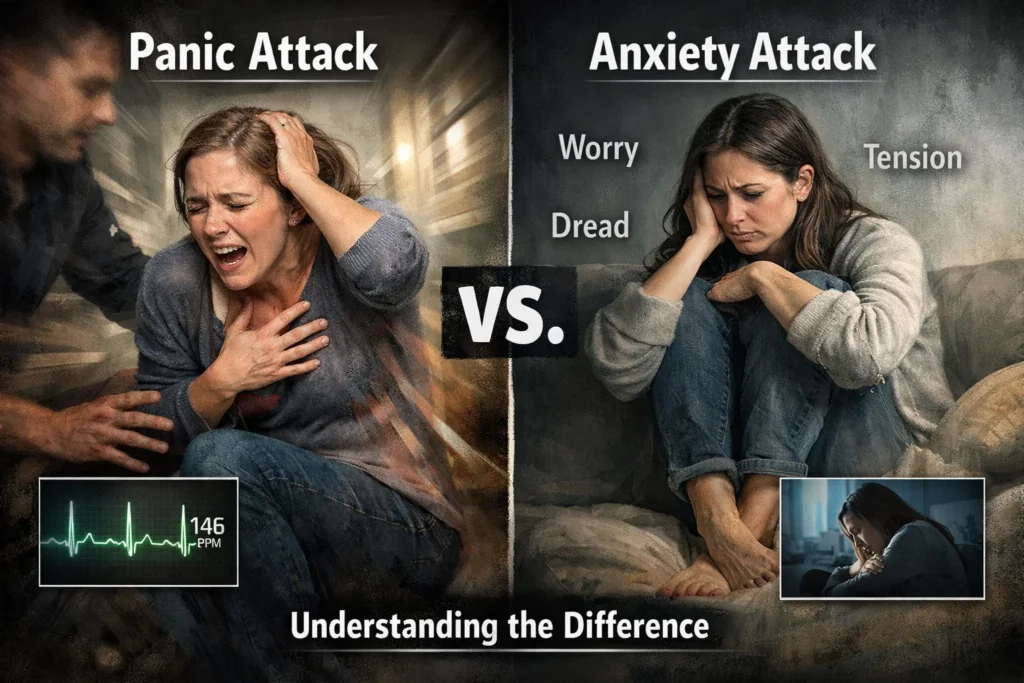
Panic Attacks vs. Anxiety Attacks: Understanding the Difference
If you’ve ever wondered about the difference between panic attacks and anxiety attacks, you’re not alone. Many people use these terms interchangeably, but mental health professionals recognize important distinctions between them.
Interestingly, the Diagnostic and Statistical Manual of Mental Disorders (5th edition), or DSM-5, formally recognizes panic attacks but doesn’t include “anxiety attacks” as a clinical diagnosis. Understanding the fundamental differences can help you better recognize what you’re experiencing and seek appropriate support.
Key Differences Between Panic and Anxiety
Focus and Timing
Anxiety typically centers on future concerns—worrying about what might happen. Panic, in contrast, is an intense fear response to perceived immediate danger.
Thought Patterns
Anxiety involves worrying thoughts about future scenarios, such as “What if I make a serious mistake in my job interview?” Panic brings thoughts about the present moment, like “I’m losing control” or “I’m going crazy.”
Behavioral Responses
Anxiety often leads to avoidance behaviors or excessive precautions to prevent feared outcomes. During a panic attack, behaviors focus on escaping the current situation or seeking immediate help.
Symptom Onset and Duration
Panic symptoms appear suddenly and intensely, typically peaking within minutes and lasting 10 to 30 minutes. These may include rapid heartbeat, shortness of breath, chest pain, dizziness, and feelings of unreality.
Anxiety symptoms are more gradual and persistent, developing over days or months. They’re generally less intense and include muscle tension, restlessness, irritability, sleep disturbances, and ongoing fatigue.
Intensity and Experience
While anxiety can become so intense it feels like an “attack,” a true panic attack involves additional distinctive features, including an overwhelming sense of immediate threat rather than future worry.
Common Anxiety-Related Conditions
Panic Disorder
Panic disorder involves recurrent, unexpected panic attacks coupled with persistent worry about experiencing more attacks or their consequences—such as fainting, having a heart attack, or losing control. People with panic disorder often avoid situations where they fear an attack might occur.
When this avoidance extends to situations where escape might be difficult or help unavailable, it’s called agoraphobia. Panic disorder can occur with or without agoraphobic features.
Generalized Anxiety Disorder (GAD)
GAD is characterized by excessive, persistent worry that interferes with daily life. People with GAD experience consuming concerns about catastrophic scenarios across multiple life domains—health, relationships, work, and more. They struggle with uncertainty, have difficulty concentrating, and agonize over making the wrong decisions.
This constant worry disrupts sleep and contributes to fatigue, irritability, and nervous tension. Physical symptoms often include digestive issues like nausea, diarrhea, or Irritable Bowel Syndrome (IBS).
Social Anxiety Disorder
Social anxiety disorder involves intense nervousness and discomfort in social situations driven by fear of judgment or embarrassment. People with this condition may avoid social gatherings, meeting new people, public speaking, or similar situations.
Physical symptoms can include blushing, stomach discomfort, sweating, trembling, and dizziness—all of which can further increase self-consciousness and reinforce avoidance patterns.
Specific Phobias
Specific phobias involve intense, disproportionate fear of particular objects or situations—such as heights, flying, animals, or medical procedures. While people with phobias often recognize their anxiety as excessive, they feel unable to control their fear response. Encountering the phobia trigger can unleash overwhelming physical sensations and urgent avoidance impulses.
Effective Treatment: Cognitive Behavioral Therapy
Cognitive Behavioral Therapy (CBT) is an evidence-based treatment that addresses the thought patterns and behaviors underlying anxiety disorders. CBT is considered the gold standard for treating anxiety, with research showing that over 60% of people experience significant symptom improvement within 12 to 20 sessions.
CBT equips you with practical tools and skills that provide lasting benefit. You’ll learn to identify unhelpful thought patterns, challenge distorted thinking, and develop healthier behavioral responses. These strategies become part of your toolkit for managing anxiety throughout your life.
Moving Forward
Whether you’re experiencing panic attacks, persistent anxiety, or both, understanding the distinction is an important first step. If anxiety or panic is interfering with your daily life, consider reaching out to a mental health professional who specializes in anxiety disorders. With the right support and evidence-based treatment, you can develop effective strategies to manage symptoms and improve your quality of life.
