
Understanding Infidelity and Rebuilding Trust
No one enters a relationship planning to cheat, yet infidelity remains a painful reality for many couples. While relationship dissatisfaction can create vulnerability to betrayal, personality factors also play a significant role in understanding why people stray.
The Psychology Behind Betrayal
Some individuals, even while experiencing genuine love, prioritize their own desires and needs above their commitment. They may develop a sense of entitlement—a feeling that they deserve “something more.” This pattern appears particularly common in narcissistic personalities, where the capacity for exclusive emotional connection is fundamentally impaired.
Understanding why people lie or betray trust requires examining the complex motivations beneath these behaviors.
Common Reasons People Lie in Relationships
Every situation is unique, but certain patterns emerge repeatedly:
Conflict Avoidance
Some people resort to small lies to sidestep uncomfortable conversations or disagreements, choosing temporary peace over honest communication.
Seeking Approval
In the desire to please a partner, people sometimes distort the truth—claiming to enjoy activities they actually dislike or pretending to share interests they don’t have.
Hiding Insecurities
Fear of appearing vulnerable can lead people to conceal their true feelings or struggles, worried that revealing weaknesses might drive their partner away.
Protective Deception
Sometimes people lie to shield their partner from hurtful truths, such as pretending that a difficult family member is more accepting than they actually are.
Deflecting Pressure
During intense conflicts, facts may be distorted to reduce personal pressure, sometimes turning problems back on the partner instead.
Concealing Harmful Habits
Fear of consequences can lead to hiding behaviors like excessive spending, drinking, or other activities that might damage the relationship.
Maintaining Privacy
Some people choose deception over disclosure when they want to keep certain aspects of their life separate, even if those things are relatively benign.
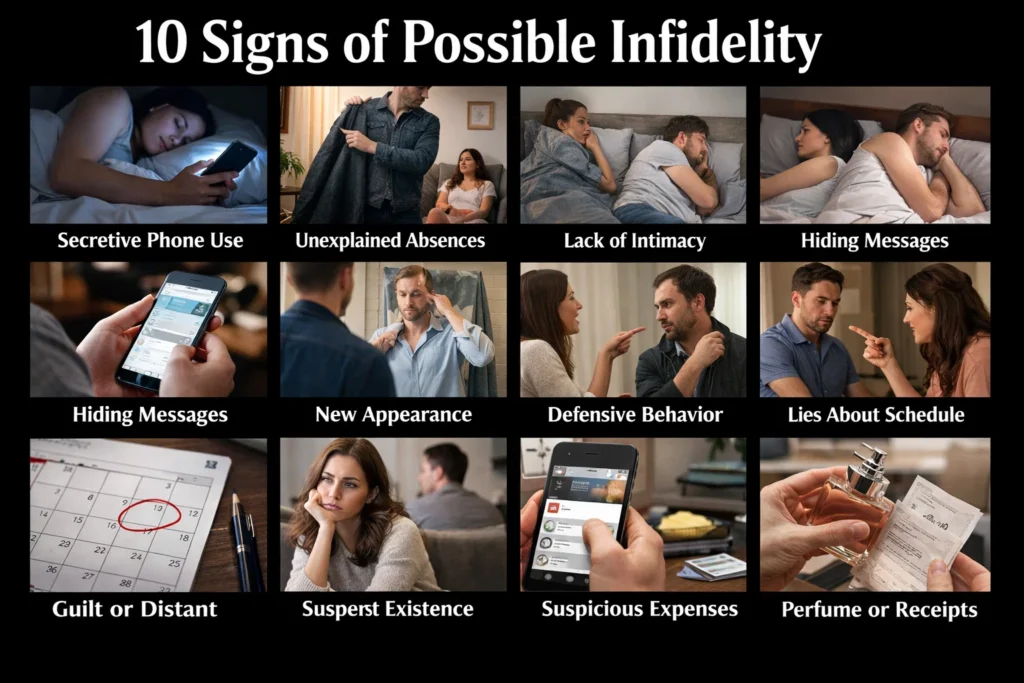
Recognizing Possible Signs of Infidelity
While no single sign definitively proves infidelity, certain patterns may warrant attention:
Behavioral Changes
Unexplained shifts in routine, such as frequently arriving late without clear explanation or sudden changes in appearance and habits.
Inconsistent Stories
Details that don’t align with previous accounts, or narratives that change when questioned further.
Defensive Reactions
Exaggerated defensiveness in response to innocent questions or casual observations.
Evasive Body Language
Avoiding eye contact, increased face-touching while speaking, or other discomfort signals during conversations about whereabouts or activities.
Communication Shifts
Becoming vague, distant, or avoiding previously normal topics of conversation. Conversations may feel superficial or carefully guarded.
Hesitant Responses
Prolonged pauses before answering simple questions, or overly careful word choices that suggest rehearsed answers.
Heightened Privacy
Suddenly protecting devices with new passwords, taking calls in private, or becoming secretive about phone and computer use.
Periods of Unavailability
Occasional disappearances where the person becomes unreachable without reasonable explanation.
Intimacy Fluctuations
Sudden intensification or withdrawal of physical and emotional affection without clear cause.
Intuitive Discomfort
A persistent feeling that something is wrong, even without concrete evidence. While intuition isn’t proof, it shouldn’t be entirely dismissed.
Strategies for Rebuilding Trust
If your relationship has experienced betrayal, rebuilding trust requires commitment, patience, and deliberate effort from both partners.
Prioritize Honest Communication
Create space for open dialogue about what happened and why. Both partners need opportunities to express their feelings, concerns, and needs without judgment or defensiveness.
Allow for Genuine Accountability
Give your partner the chance to apologize meaningfully and demonstrate sincere efforts to repair the damage. True accountability involves understanding the impact of their actions, not just expressing regret.
Create Opportunities to Demonstrate Change
Trust rebuilds through consistent actions over time. Allow your partner to prove their reliability through sustained behavioral changes, not just promises.
Practice Patience
Rebuilding trust is gradual and rarely linear. There will be setbacks and difficult moments. Both partners need to accept that healing takes time and sustained effort.
Reconnect Emotionally
Prioritize quality time together and engage in activities that strengthen your emotional bond. Rebuilding trust isn’t just about preventing future betrayal—it’s about rediscovering why you chose each other.
Consider Professional Support
A couples therapist can provide invaluable guidance in navigating the complexities of infidelity. Professional support offers tools for communication, conflict resolution, and healing that may be difficult to access on your own.
Embrace Forgiveness as a Process
Forgiveness doesn’t mean forgetting or excusing the betrayal. It means choosing to release the grip of ongoing resentment so both partners can move forward. This process takes time and may not happen immediately—and that’s okay.
Moving Forward
Whether you’re working to prevent infidelity, recognizing warning signs, or rebuilding after betrayal, remember that healthy relationships require ongoing honesty, vulnerability, and mutual commitment. If you’re struggling, reaching out for professional support isn’t a sign of failure—it’s an investment in your relationship’s future and your own well-being.

Muito bom!!!!
[…] outro lado, alguns sinais de um relacionamento não saudável são mais perceptíveis do que outros. Pode ser difícil reconhecer sinais sutis, especialmente […]
[…] um relacionamento tóxico pode ser desafiador, especialmente porque esses padrões podem se desenvolver gradualmente. Alguns […]